
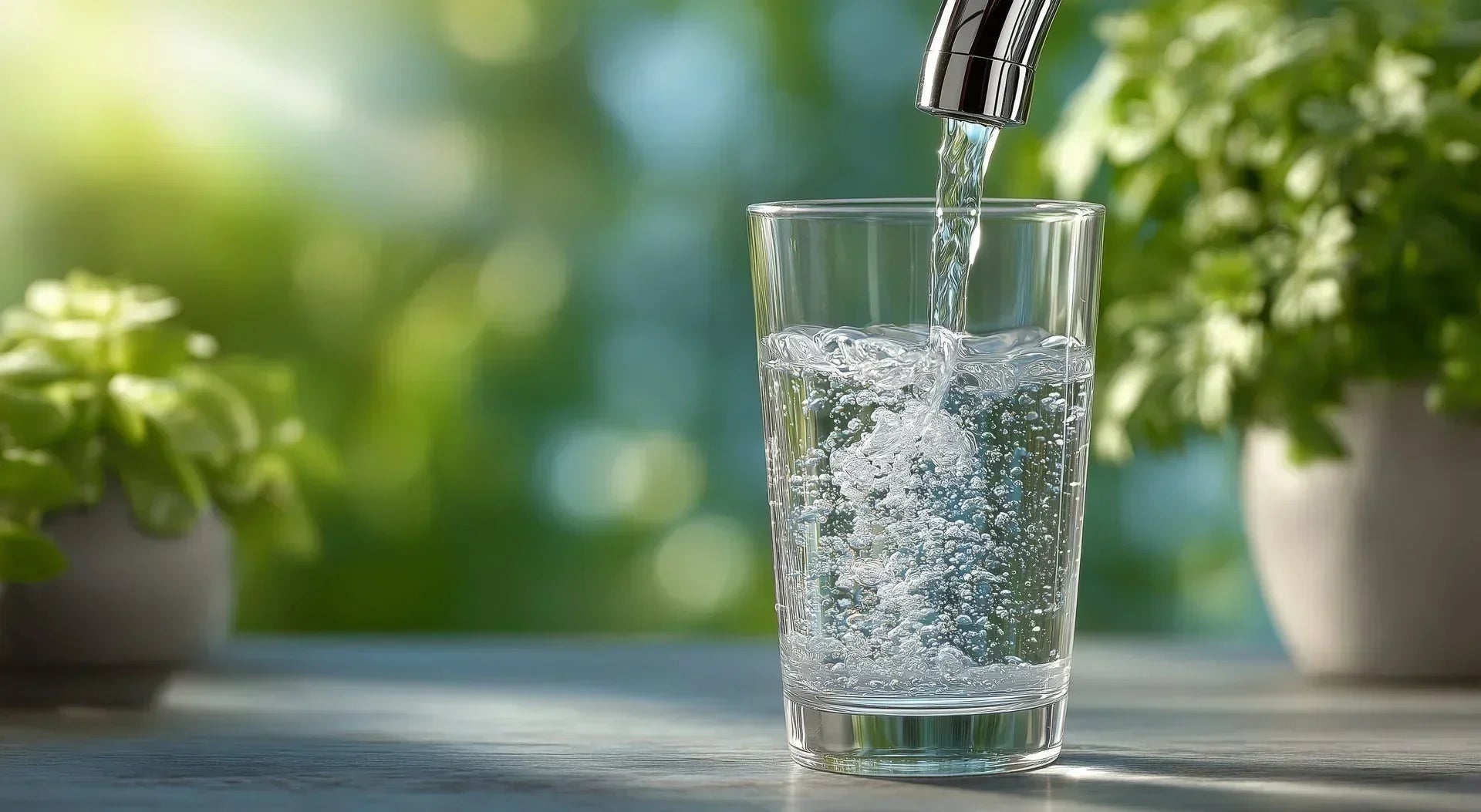
Do you need a water filter in the Netherlands? Read everything you need to know here!
We drink tap water every day in the Netherlands, often without really thinking about it. But you also hear stories about chemical residues and micropollutants in our tap water. Is there any truth to this? And is it important to have a water filter?
In this blog, we'll take you through the story of drinking water and chemicals, so you can make a good decision about whether a water filter is important for your situation.
In a nutshell
In the Netherlands, drinking water is generally already of excellent quality. However, some households consciously opt for additional filtering, often as a precaution. The best filter depends heavily on your goals: taste, safety, chemicals, or water hardness.
How good is our drinking water actually?
The Netherlands is known for its high drinking water quality. Water companies purify groundwater and surface water through multiple steps, including sand filtration, carbon filtration, ozone, UV, and aeration. Moreover, the water is continuously and rigorously monitored, ensuring it almost always meets the strict EU and national standards.
However, the fact that drinking water is safe does not mean that it is completely free of all unwanted substances.
What else could be in our drinking water?
Although the quantities are extremely low, traces of:• medicines may occur
• pesticides
• industrial chemicals (such as PFAS)
• microplastics
• substances from old pipes, such as lead or copper
It's important to remember that these are only very small amounts, not high concentrations. They pose no health risk to most people.
However, people who are extra sensitive to this, who are exposed to it for a very long time or who want to consciously drink water that is as pure as possible, sometimes choose to use their own water filter at home.
Bottom line: Dutch tap water is safe, strictly controlled, and of high quality. But it's not completely free of everything.
Why would you choose a water filter?
People choose a water filter these days for various reasons. Often as a precaution, but sometimes also for the taste or for personal health reasons. Below are the main reasons for choosing a water filter:
1. Certainty about chemical substances
Think of PFAS, pharmaceutical residues, or industrial traces. These are micro-quantities, but some people still want to reduce them as much as possible.
2. Outdated or lead pipes
Especially in older houses, pipes can release substances into the water.
3. Improve taste and smell
Filters can neutralize chlorine residue or a metallic taste or odor.
4. Health, sensitivity or young children
People with a baby or young children or people with vulnerable health sometimes consider a water filter to ensure clean drinking water.
5. Hard water (lime)
This has nothing to do with safety, but it does have to do with the taste of the drinking water. Moreover, appliances calcify less quickly when limescale is filtered from the water.
Bottom line: Filtering is rarely really necessary, but it can provide certainty about pure drinking water, contribute to peace of mind, or improve the taste of the water.
What different types of water filters are there?
Not every water filter works the same way. In fact, most filters are designed for one specific purpose. Below you'll find a handy overview of the most popular types of filters:
1. Activated carbon filters
Known from filter jugs, tap filters and table models.
Function: Carbon binds organic substances, odors, tastes, and some chemical residues and filters these substances from the water.
2. Sediment filters
Filter coarse particles such as rust, sand or sediment from the water.
Function: This type of filter functions primarily as a pre-filter or extra protective layer for your drinking water.
3. Reverse Osmosis (RO)
This is the most intensive household system. It's also a relatively expensive system; a significant investment for most households.
How it works: This filter forces water through a membrane that traps almost all dissolved substances, from heavy metals and micropollutants to PFAS residues.
4. Combination filters or multiple systems
This involves using several filter layers in succession, such as sediment, carbon, and RO or other fine filters. These are often the most expensive options.
Bottom line: Each filter type performs differently, and there's a significant difference in both strength and price. So, consider carefully what suits your needs and budget.
What are the advantages and disadvantages of each filter type?
If you're curious about the specific advantages and disadvantages of each filter type, we've briefly listed them for you below:
1. Activated carbon filter
Advantages:
• improves taste and smell
• fairly effective against organic substances and some chemical residues
• affordable and simple
Disadvantages:
• less effective against heavy metals, PFAS or pharmaceutical residues
• saturates quickly and must be replaced regularly
• poor maintenance can cause bacterial growth
Suitable for: taste, smell and light filtering.
2. Sediment filter
Advantages:
• ideal against visible particles and rust
• protects other filters in a system
Disadvantages:
• no effect against chemicals or dissolved substances
Suitable for: old pipes or water with particles.
3. Reverse osmosis (RO system)
Advantages:
• very thorough filtering
• reduces heavy metals, pesticides, drug residues and micro-pollutants
• ideal for those looking for maximum purity
Disadvantages:
• higher purchase costs
• Relatively high maintenance required
• produces rinse water
• also removes minerals, which changes the taste
Suitable for: maximum purification, people with sensitive health, doubts about water quality.
4. Combination filter
Advantages:
• tackles several contaminants simultaneously
• lasts longer than individual jugs
• often the best balance between comfort and purification
Disadvantages:
• relatively expensive
• maintenance and installation are quite intensive
• not always necessary for every household
Suitable for: those who want all basic forms of filtering in one solution.
Finally
Tap water in the Netherlands is generally clean, safe, and tested to strict standards. For most households, additional filtering is unnecessary; it offers little additional health benefit and involves costs and maintenance.
However, there are situations (old pipes, sensitive health, or the desire for the purest drinking water) where a water filter can be beneficial. It's important to choose wisely and thoroughly research which type of filter best suits your needs and budget, such as an activated carbon filter, sediment filter, or reverse osmosis filter. A filter is never a guarantee, but it can be a potential tool for improving your drinking water quality, provided you choose wisely and maintain your filter properly.
Renee Verberne