
Minimal cold training: what do you need for maximum effect?
You’ve probably seen it before: people stepping into ice baths, taking cold showers, or walking outside in winter without a coat. Cold training is more popular than ever. But does that mean you need to sit shivering in an ice bath for minutes on end to experience its benefits?
The surprising answer: no. A growing body of research and practical experience shows that very small doses of cold already have value—and are sometimes even more effective than long, extreme sessions. In this blog, we explore how cold training works, why minimal exposure can be so powerful, and how to integrate it safely and easily into your daily life.
This blog at a glance
- Cold training does not have to be extreme; small stimuli often already provide meaningful effects.
- The face responds especially quickly due to specific nerves and reflexes.
- Mini cold training may support resilience, alertness, immune resistance, and mental sharpness*. Examples include holding your face in ice water, taking a 10–30 second cold shower, cooling hands or feet, or brief exposure to outdoor cold.
*Health claim pending approval by the EFSA.
What exactly is cold training?
Cold training simply means intentionally exposing your body to cold temperatures for a short period of time. This can range from very mild (cold water on your wrists) to intense (ice baths). The goal is not suffering or pushing your limits—it is about activating your body’s natural adaptation mechanisms.
At the heart of this lies one key concept: hormetic stress. This is mild, short-term stress that improves resilience and health, as opposed to harmful, chronic stress. It challenges the body just enough to trigger a positive response without overwhelming your system.
Examples of hormetic stressors
- Physical exercise
- Intermittent fasting
- Heat exposure (sauna) or cold exposure (cold showers)
- Short-term mental challenges (brain teasers)
- Training in a fasted state
Essence: Cold training is the intentional application of a short, healthy stress stimulus that helps your body adapt. It is a classic example of hormetic stress.
How does cold affect your body?
As soon as your body senses cold, a fascinating interplay of reflexes, hormones, and nerve signals is set in motion. Key responses include:
1. Your nervous system wakes up
Brief cold exposure activates the sympathetic nervous system, increasing alertness, clarity, and wakefulness*. Heart rate may rise temporarily and breathing becomes deeper.
2. Noradrenaline (norepinephrine) increases
This neurotransmitter contributes to focus, mood, and pain regulation*. Levels can rise noticeably within seconds of cold exposure.
3. Your blood vessels get trained
Switching between cold and warmth keeps blood vessels flexible and responsive—effectively “training” them*.
4. Brown fat becomes active
Brown adipose tissue helps generate heat and supports energy metabolism*. Short cold stimuli activate this tissue.
5. Your stress system is recalibrated
Cold activates the central stress system (hypothalamus, pituitary, and adrenal glands) and may contribute to better balance within this system*.
Essence: Cold training is about brief, powerful, and natural responses. Your body becomes more resilient on both a physical and mental level.*
*Health claims pending EFSA evaluation.
The benefits of minimal cold training
Many people assume that longer and colder is better—but that is a misconception. Mini cold training is often highly effective due to several unique mechanisms:
1. The mammalian dive reflex
When cold water touches your face—especially around the eyes, nose, and cheeks—an ancient reflex is activated, leading to:
- Slowing of the heart rate
- Activation of the nervous system
- Calming of the stress response
- Improved focus
This reflex is so sensitive that even 5–10 seconds of cold exposure can already have noticeable effects.
2. Facial nerve endings are extremely sensitive
The trigeminal nerve in the face responds rapidly to cold, which is why cold exposure to the face can be more effective than a two-minute cold shower.
3. Consistency beats extremes
Short stimuli are far easier to maintain than long sessions. As with physical training, frequency often matters more than intensity.
4. The stress response peaks quickly
Most beneficial effects—such as increased noradrenaline, alertness, and nervous system activation—occur within the first 20–30 seconds.
Essence: The power of cold training lies not in duration or extremes, but in short, consistent stimuli that activate natural reflexes.
5 mini cold-training practices you can try today
1. Face in ice water (5–20 seconds)
The most powerful minimal cold-training method.
- Directly activates the dive reflex
- Stimulates the nervous system
- Lowers heart rate
- Calms the stress response
How to do it:
- Fill a bowl with cold water and ice cubes
- Take a few calm breaths
- Submerge your face for 5–10 seconds
- Repeat 2–3 times
2. Cold shower finish (10–30 seconds)
At the end of a warm shower, turn the water fully cold. Start with 10 seconds and gradually build up to 30 seconds.
- Immediate alertness
- Supports vascular health
- Enhances mental resilience
3. Cooling hands or feet (30–60 seconds)
Hands and feet contain many cold and heat receptors, making this a highly accessible and effective option.
- Hands under cold running water
- Feet in a cold foot bath
- Hands in a bowl of ice water
4. Outdoor cold air (1–5 minutes)
Step outside briefly without a jacket or open a window in the morning and take a few deep breaths. Mild, but surprisingly refreshing.
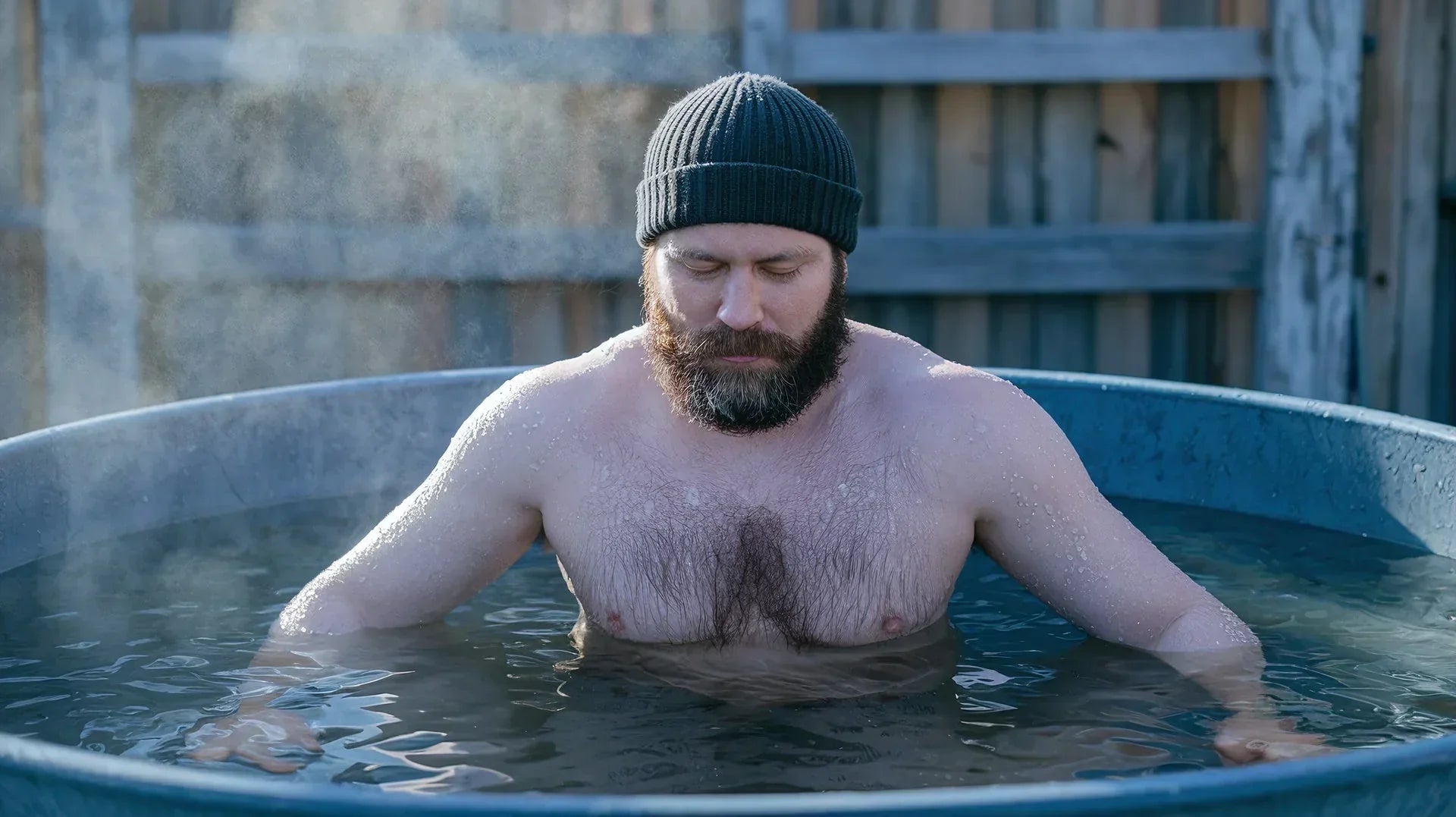
5. Ice baths (only if you want to go further)
Ice baths are effective but more intense and not suitable for everyone. Fill a tub with cold water (10–15°C), enter calmly, breathe deeply, and stay in for a maximum of 2–10 minutes. Gradually build up duration and warm up slowly afterward.
Essence: Most benefits of cold training can already be achieved with short sessions. Ice baths are effective but more demanding and optional.
Is cold training safe?
Cold training is generally safe, but caution is advised in certain situations.
- Always build up gradually
- Stop if you start shivering excessively or hyperventilating
- Avoid combining with alcohol or prior extreme heat exposure
- Consult a doctor if you have heart rhythm disorders
- Pregnant or using certain medications? Always consult your doctor first
- Never combine cold exposure with breath-holding under water
Essence: Listen to your body—cold training should feel stimulating, not overwhelming.
In conclusion
Cold training does not have to be extreme—quite the opposite. Sometimes simply placing your face in a bowl of ice water is enough to reset your nervous system, sharpen focus, and support resilience. Small doses of cold often produce disproportionately large effects because the body is highly sensitive to this natural stressor.
See it as a gentle nudge for your system, not a competition or endurance test. Start small, experiment, and discover what works best for you.