
What is ultra-processed food and why is it under fire?
Ultra-processed foods are increasingly under scrutiny. This was also the case in a large review published in late 2025 in the scientific journal The Lancet. In it, 43 researchers pooled their findings to comprehensively map the health effects of ultra-processed foods. The conclusion? Frequent consumption is linked to a wide range of health problems, from diabetes to cardiovascular disease and even depression.
But what exactly is ultra-processed food? And does this mean you should never eat anything from a package again? In this blog post, we explain what ultra-processed food is, why it has such an impact on your body, and how you can be more mindful of it in practice.
Table of contents:
- What is ultra-processed food?
- Impact on your body
- What does science say?
- Is 'processed' always bad?
- 5 tips to cut back
This blog in a nutshell
Ultra-processed foods often contain few nutrients and many additives.
Large studies show that frequent use is linked to several conditions.
By the way, not everything processed is automatically unhealthy. Making conscious choices already helps enormously.
What is ultra-processed food?
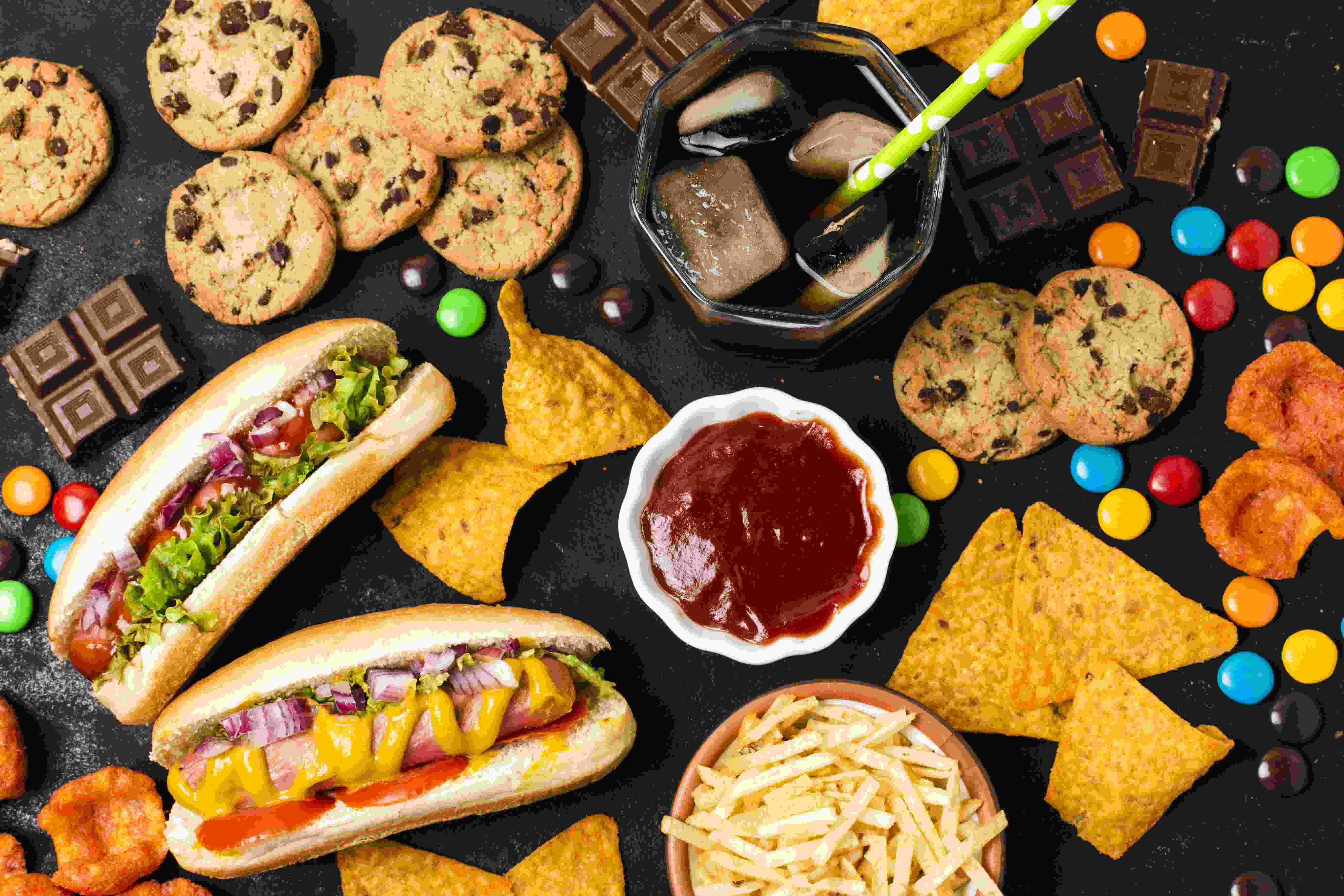
Ultra-processed food is a term derived from the NOVA classification , a system that categorizes food based on its degree of processing. Ultra-processed products are industrial products that typically contain refined ingredients and additives that you wouldn't use at home.
Examples include:
- soft drinks and energy drinks
- chips and cookies
- processed meat such as sausage and nuggets
- ready-made meals
- supermarket bread with many additives
These products often contain high levels of sugar, salt, unhealthy fats, preservatives, and artificial colors, flavors, and fragrances, but little fiber, vitamins, and minerals. Moreover, they are often formulated to be easy to eat and therefore hard to resist .
Essence: Ultra-processed foods are highly industrially processed and often lack essential nutrients.
Why does your body react so strongly to this?
According to researchers, humans are biologically ill-equipped to handle large amounts of ultra-processed food. There are several reasons for this:
- Fast energy spikes : Fast sugars and refined carbohydrates cause your blood sugar to fluctuate significantly.
- Low satiety : Lack of fiber and protein makes you feel hungry again more quickly.
- Influence on intestinal flora : Additives and a one-sided composition can throw your intestinal bacteria out of balance.
- Inflammatory responses : Some ingredients appear to promote low-grade inflammation in the body.
This may explain why ultra-processed foods are not only linked to obesity, but also to disorders in almost all organs.
Essence: The body receives many stimuli, but little real nutrition.
What does science say about it?
The Lancet review compiled results from more than one hundred previous studies. These studies show a clear correlation between a high intake of ultra-processed foods and an increased risk of, among other things:
- cardiovascular diseases
- type 2 diabetes
- certain types of cancer
- kidney disease
- depressive complaints
Important to know: these are correlations, not direct proof that ultra-processed foods are the sole cause. Lifestyle, exercise, sleep, and stress also play a very important role.
The strength of the study lies primarily in its scale and the consistency of the findings: all studies unanimously show that there are connections.
Bottom line: Many ultra-processed foods are associated with health risks, but they are not separate from the rest of your lifestyle.
Is 'processed' food always bad?
No, not all processed foods are unhealthy. The difference lies mainly in the degree of processing and the composition. Processing can even be beneficial, such as fermentation, pasteurization, or freezing. Healthy processed foods include:
- Frozen vegetables without additives
- Yogurt or cottage cheese
- Whole wheat bread with a short ingredient list
- Nuts, seeds and legumes
The problem arises when food is so highly processed that its original structure and nutritional value are largely lost. A useful tool for identifying this type of ultra-processed food is reading the ingredients list. It's not just about how many ingredients are in the food, but especially about which ones.
Ingredients and additives to be aware of
You don't necessarily have to avoid these substances all the time, but a high and frequent intake can be a signal that a product is highly processed:
- Glucose syrup, fructose syrup, maltodextrin
Fast carbohydrates that quickly raise your blood sugar and provide little satiety. - Extracted vegetable fats such as palm fat or fully hydrogenated fats
Often used for texture and shelf life, but poor in nutritional value. - Flavour enhancers (such as E621/monosodium glutamate)
Can stimulate appetite without your body actually receiving any nutrition. - Colorants and flavors
These do not add nutritional value, but make products more attractive than they are in terms of content. - Emulsifiers and thickeners (such as carrageenan, polysorbates)
Some studies suggest that at high intakes they may affect the intestinal barrier.
A simple rule of thumb: if you wouldn't use the ingredients in your own kitchen, it's often a sign that the product has been highly processed. Also: the shorter and more recognizable the ingredient list, the better.
Essence:
Processed is not the same as ultra-processed, and it's not necessarily unhealthy either. It's not the processing itself, but the composition that determines a product's nutritional value.
5 tips to eat less ultra-processed food
You don't have to overhaul your diet all at once. Small adjustments often make a big difference and are also easier to maintain in the long run. Below are 5 tips to help you:
- Read labels with a purpose
Don't just look at calories, but especially at:
- The length of the ingredients list
- Recognizable ingredients
- Added sugars in various forms
The shorter and more understandable, the better.
- Replace instead of delete
For example, replace:
- soft drink → (sparkling) water with lemon
- cookie → yogurt with fruit
- ready-made sauce → olive oil, fresh pureed tomatoes, fresh herbs or lemon
This way it doesn't feel like 'giving something up', but like improving.
- Choose products with a natural structure
Foods that largely retain their original form (vegetables, fruits, grains, nuts) often provide more satiety and more stable energy than highly processed varieties.
- Watch out for hidden sugars and salts
Sugars and salt are often hidden in savory products like bread, sauces, and deli meats. By cooking more often, you automatically get a better handle on this.
- Be gentle with yourself
There's no such thing as perfect food. Socializing, leisure, and enjoyment are also part of a healthy lifestyle. It's about what you eat most of the time, not about exceptions.
Bottom line: Making conscious choices doesn't have to be all-or-nothing. With small adjustments, you can make your diet much healthier and even tastier.
Finally
The attention surrounding ultra-processed foods is justified, but it doesn't have to lead to fear or guilt. It's all about balance and awareness. By understanding what ultra-processed foods are and what they can do to your body, you can make step-by-step choices that support your energy, health, and well-being, in a way that suits your lifestyle. Healthy eating doesn't have to be perfect. It's much more important that it's achievable for you, that you can maintain it, and that you continue to enjoy delicious and healthy food.
From our range: