
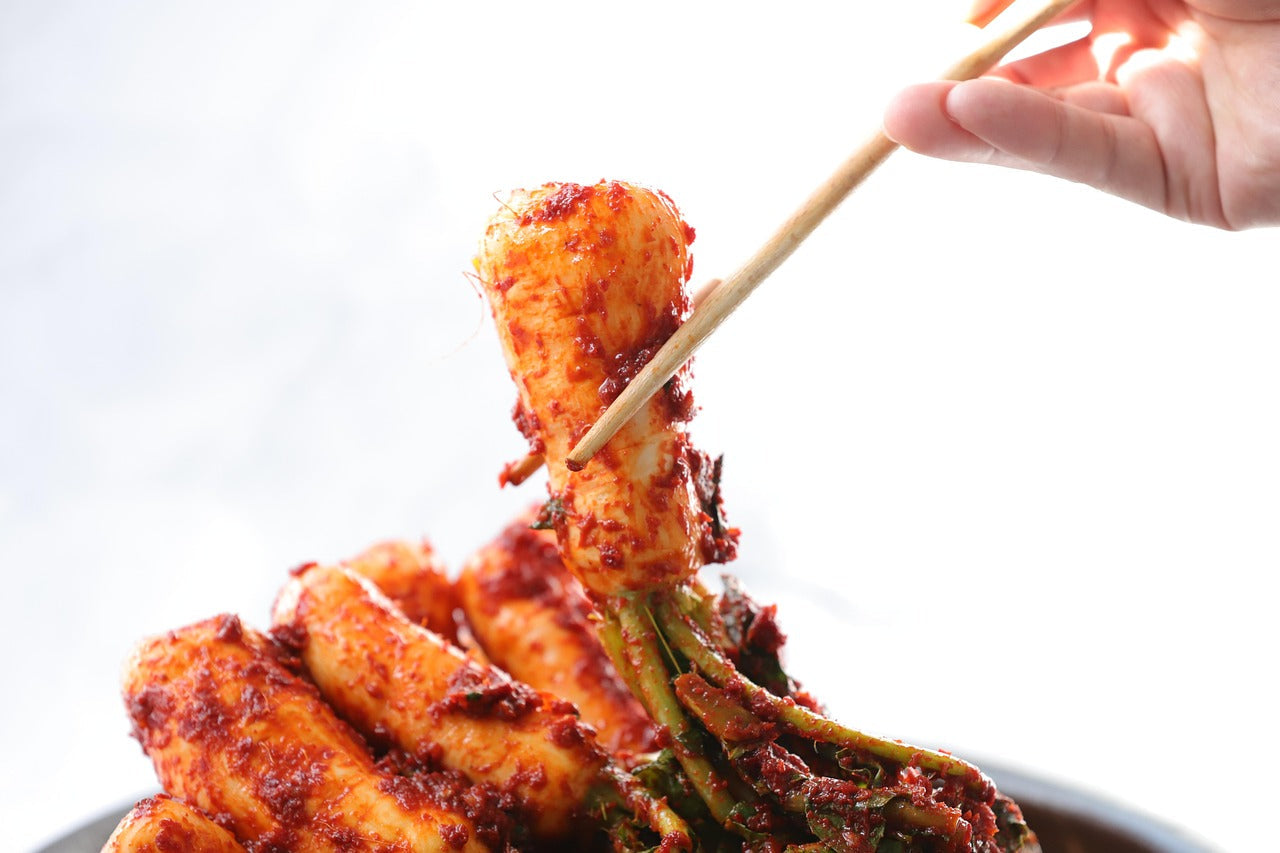
Probiotics (Kimchi) and Postbiotics Versus Microplastics: New Developments
Microplastics and nanoplastics are now found everywhere: in the air, water, food, and even in our bodies. Researchers are concerned that the smallest particles can pass through the intestinal wall and accumulate in organs such as the kidneys and brain. This makes the search for ways to remove these particles from the body increasingly urgent.
A new study from South Korea points to something remarkable: a bacterium found in kimchi, the fermented Korean vegetable dish, appears capable of “capturing” nanoplastics in the intestines and removing them through feces.[1] What exactly was discovered, and what could it mean for the future?
What Did the Research Show?
Scientists at the World Institute of Kimchi investigated a lactic acid bacterium found in kimchi with the rather lengthy name Leuconostoc mesenteroides CBA3656. They examined how effectively this bacterium could bind to polystyrene nanoplastics, a widely used plastic material.
In a simple laboratory environment, the bacterium bound approximately 87 percent of the nanoplastic particles, comparable to a reference strain. The difference became apparent only in a simulated human intestine: while the reference strain dropped to about 3 percent binding efficiency, the kimchi bacterium still retained around 57 percent of the nanoplastics. This suggests that the strain can maintain its grip on the particles under more realistic intestinal conditions.
Animal experiments followed. Mice that received the kimchi bacterium excreted more than twice as many nanoplastics in their feces as mice that did not receive the probiotic. This supports the idea that the bacterium binds nanoplastics in the gut and helps eliminate them through normal bowel movements.
How Might Kimchi Work in the Human Body?
Importantly, this is not a magical detox food. Rather, it represents an interesting biological interaction within the intestine. Researchers propose the following mechanism:
- The kimchi bacterium attaches itself to nanoplastic particles present in intestinal contents.
- This binding makes it more difficult for plastic particles to cross the intestinal wall and enter the bloodstream.
- Anything that is not absorbed is eventually excreted through feces.
Kimchi is naturally rich in live lactic acid bacteria, provided it has not been heated or pasteurized. Fermented foods have long been associated with a healthy gut microbiome; now they may have an additional role in helping to capture certain environmental contaminants within the intestine.
This research does not stand alone (see below), but it is still in an early stage. To date, studies have primarily been conducted in simulated intestinal models and in mice, not in large groups of humans. Therefore, there is currently no evidence that a daily serving of kimchi significantly reduces the amount of microplastics or nanoplastics in the human body.
Postbiotics
An interesting additional piece of the puzzle comes from a recent preprint describing a postbiotic approach: a heat-inactivated biofilm of Limosilactobacillus fermentum (Qi601) that can physically bind microplastics and nanoplastics under conditions that mimic the human digestive tract.[2] In laboratory experiments, this non-living bacterial material formed a type of “net” around polystyrene nanoplastics, reducing their attachment to intestinal epithelial cells and limiting their penetration into cells. In addition, a small chewing-gum experiment demonstrated that Qi601 could also bind microplastic fragments released from chewing gum within the human mouth.
Taken together with the kimchi study, in which living lactic acid bacteria may function as biological sponges for nanoplastics, a broader picture emerges: both probiotics (living microorganisms) and postbiotics (carefully inactivated bacterial preparations) could potentially be developed as edible “plastic binders” that help protect the intestinal barrier and facilitate the removal of some microplastics and nanoplastics through natural bowel movements.
Potential Applications: From Side Dish to “Microplastic Probiotic”
These studies suggest several interesting future possibilities. Potential applications that scientists and companies may explore include:
-
Targeted Probiotic Capsules
The specific strain L. mesenteroides CBA3656 could potentially be developed as a probiotic supplement designed to bind and remove nanoplastics. Dosage, safety, and effectiveness would need to be evaluated in human clinical trials. -
Functional Kimchi Varieties
Manufacturers could develop kimchi products enriched with these specific bacterial strains. This might include “microplastic-friendly” kimchi with guaranteed levels of live cultures, stored under refrigeration and not pasteurized. -
Combination with High-Fiber Foods
Dietary fiber increases intestinal bulk and movement, potentially helping to eliminate bound particles—including nanoplastics—more rapidly. A practical approach could involve combining fermented foods such as kimchi with vegetables, whole grains, and legumes. -
A Broader Concept: Biosorption Through Food
The idea that bacteria from fermented foods can bind pollutants extends beyond plastics. Researchers refer to this process as “biosorption”: living or dead microorganisms that allow chemical particles to adhere to their cell walls. In the future, this principle might also be applied to other contaminants in the human digestive tract.
In all of these potential applications, the emphasis is on supplementation rather than replacement. Reducing plastic use, lowering environmental pollution, and maintaining clean water and air remain far more important than attempting to mitigate damage afterward.
Ready for Some Kimchi?
What does all of this mean for someone standing in a supermarket today? A few cautious and practical points:
- If you enjoy kimchi, it can be a valuable part of a varied, plant-based diet. It provides fiber, vitamins, and live bacteria that may support gut health.
- Whenever possible, choose refrigerated, unpasteurized (“raw”) kimchi that specifically states it contains live cultures, as these bacteria are central to the studies discussed.
- Do not expect miracles: there is currently no human evidence that kimchi or any single probiotic can “cleanse” the body of microplastics. Consider it instead as a potential additional benefit within a broader package of healthy lifestyle choices.
For now, the greatest benefit likely comes from a combination of reduced plastic exposure (less single-use plastic, avoiding heating food in plastic containers, filtering tap water where appropriate) and dietary patterns that support the gut and its microbial community, with fermented foods such as kimchi potentially playing an interesting role.
What can you do yourself?
Although this research focuses on a specific bacterial strain from kimchi and is still in an early stage, it confirms once again how important a healthy gut microbiome is. A healthy gut flora not only supports your digestion but also plays an important role in overall health.
Do you want to support your gut microbiome daily? Then a high-quality probiotic can be a valuable addition to a healthy lifestyle. Smidge Sensitive Probiotics contain a carefully selected mix of bacterial strains and has been developed without unnecessary additives.
Additionally, probiotics need nutrients to develop properly. Therefore, a prebiotic such as Beta GOS can be a great addition. This prebiotic fiber nourishes beneficial gut bacteria and thus helps support a healthy and diverse microbiome.
View here:
References
[1] LEE, Jisu, et al. Efficient biosorption of nanoplastics by food-derived lactic acid bacterium. Bioresource Technology, 2026, 134234.
[2] BERKES, Eva A., et al. Postbiotic Binding of Micro-and Nanoplastics: In Vitro Intestinal Epithelial Protection and Proof of Concept in the Human Mouth. bioRxiv, 2026, 2026.05.11.724280.