



Rich in amino acids
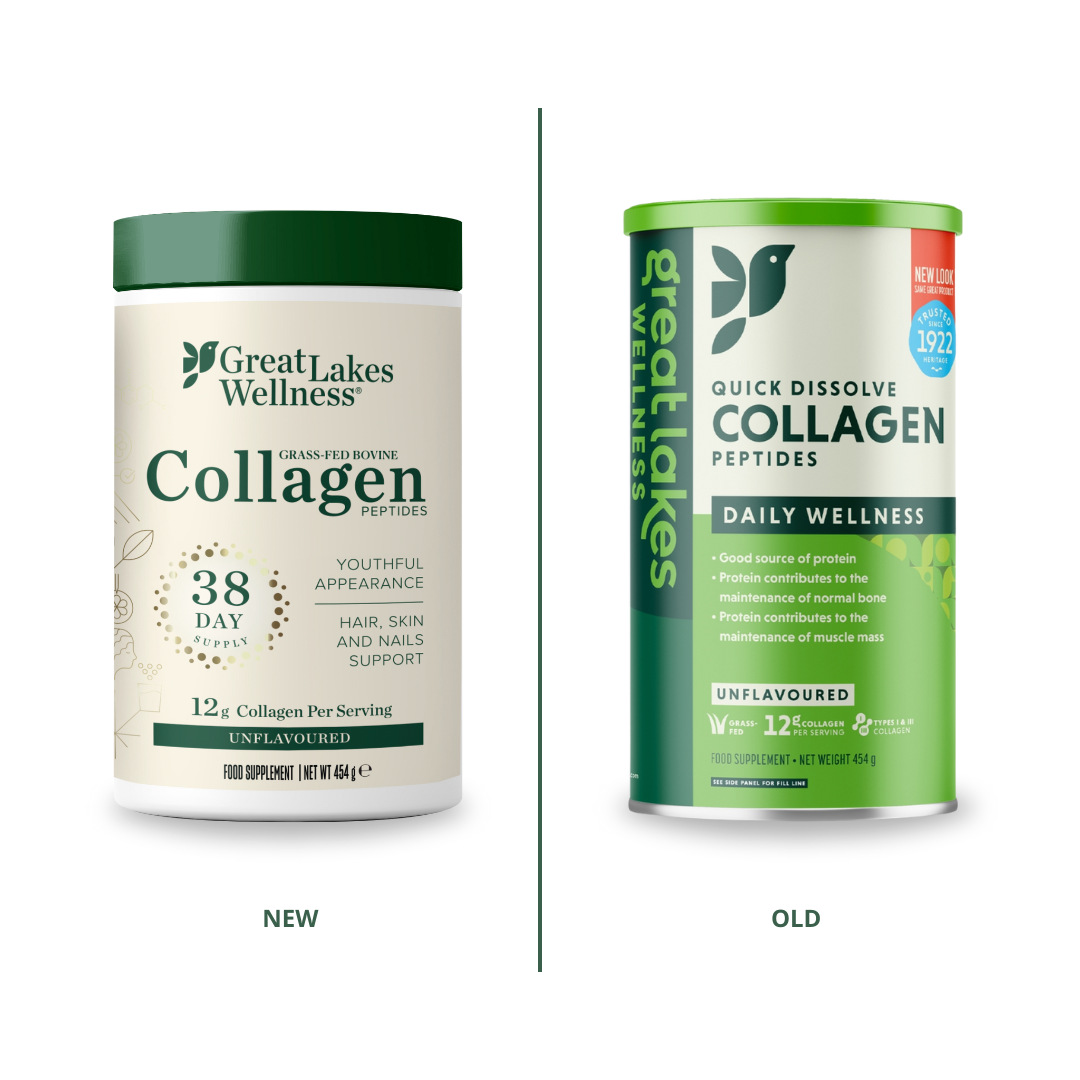
Great Lakes Collagen Hydrolysate is produced by 'pre-digesting' gelatin, as it were, with the help of enzymes into peptides, or shorter amino acid compounds. This process ensures higher absorption and better distribution. Furthermore, unlike gelatin, collagen hydrolysate stays liquid when you mix it with a cold drink. The amino acid profile of collagen is particularly rich and contains a particularly high amount of the amino acids alanine, glycine, glutamic acid, hydroxyproline and proline. In addition, collagen hydrolysate is a source of collagen type I and III and of magnesium, calcium and phosphorus. Calcium promotes energy metabolism and supports digestion, calcium and phosphorus are good for the teeth and skeleton, and calcium and magnesium are good for the muscles, the nervous system and the process of cell division. This collagen powder can easily be added to coffee, tea, smoothies, porridge, yoghurt, orange juice, water or soup. Add two tablespoons, stir to let the powder dissolve and your collagen-rich drink or meal is ready.
The importance of collagen for your body
Collagen is the most abundant protein in your body: around 25% to 35% of the proteins in your body consist of collagen. Like all other building blocks in your body, this collagen needs maintenance, so it is important to make sure you get enough good protein or to supplement your intake with protein supplements such as gelatin or collagen hydrolysate. Collagen gives strength, firmness and elasticity to the connective tissues in our skin, bones, muscles, tendons, cartilage, nails and teeth. The amino acids in collagen are the building blocks of many of our body's structures. The collagen network, which holds all the loose tissues and structures of the body together, also serves as a communication network that sends messages throughout the whole body.
Gelatin versus collagen hydrolysate
Gelatin is the boiled-down form of collagen and comes from beef, chicken, pork or fish. Collagen hydrolysate is the further processed form of gelatin, in which the proteins have been broken down into smaller pieces by enzymes. It is pre-digested, as it were: the amino acids have become loose Lego bricks, called peptides. One advantage of this is that it is easier to absorb and more suitable for people who have difficulty digesting whole proteins. Another big difference from gelatin powder is that collagen hydrolysate does not form a gel when you mix it with a liquid, but simply stays liquid. Gelatin has to be dissolved in lukewarm or warm water and does form a gel, which is why it is often used deliberately to set dishes. In both cases the flavour is neutral and the amino acid profile is the same.
The collagen-rich diet of our ancestors
The diet of most ancestral cultures was generally more nutritious than today's modern diet. Not only do we now eat more processed food than before and no longer know where much of our food comes from, the practice of eating all parts of an animal has also been lost in our modern culture. The skin, tendons, cartilage and other collagen-rich cuts of animal meat contain an enormous amount of nutrients. For anyone pursuing a sustainable, ethical and healthy way of life, the nose-to-tail principle can be an important starting point: as little of the animal as possible goes to waste and we eat with respect for animals and nature. As you get older, the amount and production of your body's own collagen declines.
Nose-to-tail eating
For anyone pursuing a sustainable, ethical and healthy way of life, the nose-to-tail principle could be an important starting point when eating animal products. When we eat in an evolutionary way, we not only ensure that as little of the animal as possible goes to waste, and thus eat with respect for animals and nature, but eating animal organs, tendons, cartilage and bones also has countless health effects. Many traditional civilisations already knew that these parts of animals are extremely rich in nutrients essential to the human body. For example, collagen plays a major role in the body's self-repair process and gives firmness and elasticity to bones, muscles, tendons, cartilage, nails, teeth and skin. The amino acids in collagen are the building blocks of these structures. These amino acids also play a role in many other bodily processes. As you get older, the amount and production of your body's own collagen declines. There are various types of collagen that can serve as a supplement and that you can take to provide your body with more collagen.


