



Enriching your kitchen and your body
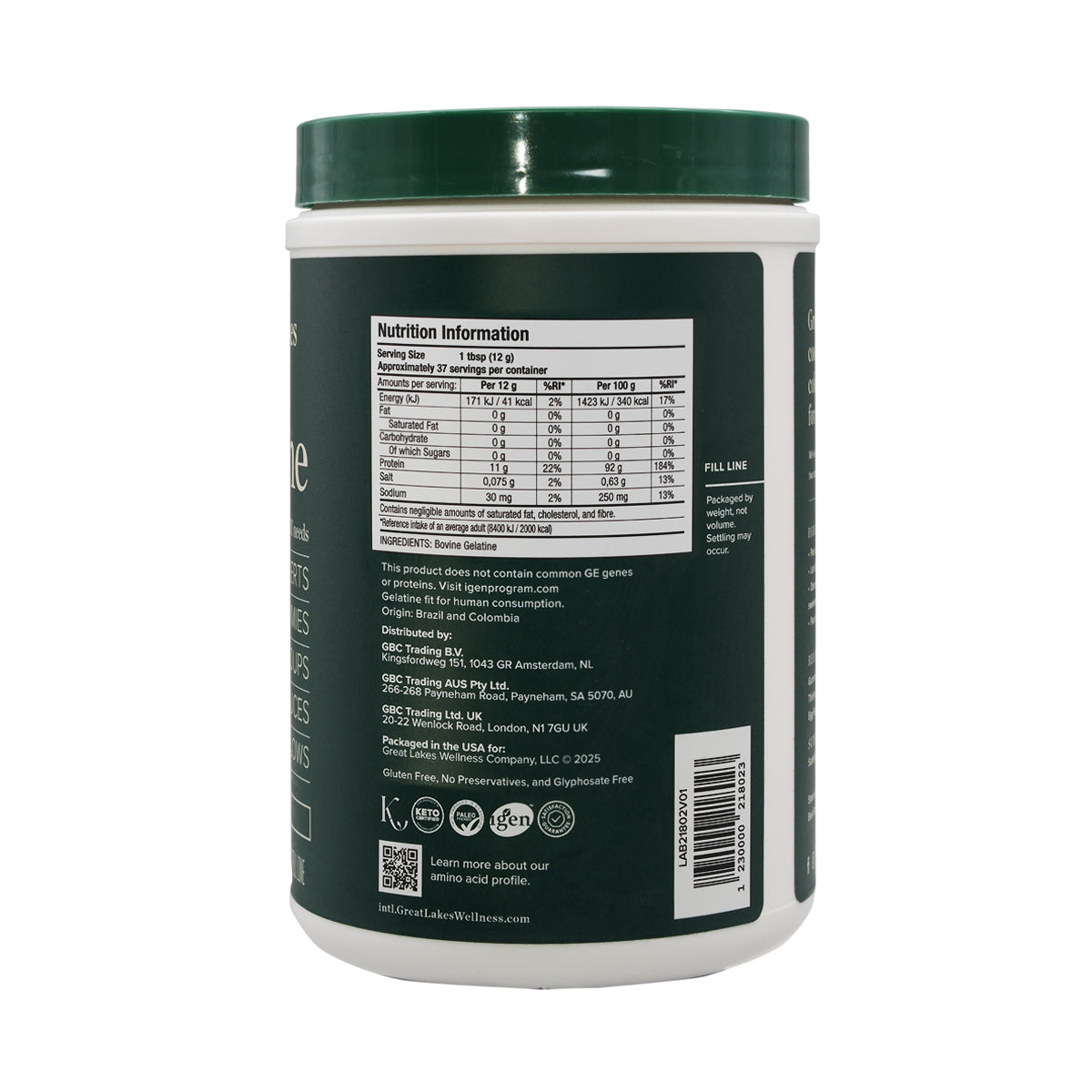
Great Lakes Beef Gelatin is an excellent source of protein for our body, which depends on good protein sources to maintain bones, tissues and structures. Gelatin powder is made by heating bovine collagen from animal hides, bones and tissues. It is a natural binding agent that is as sticky as glue and has therefore been used in all kinds of recipes for generations. The gelatin dissolves in warm liquids and then thickens as it cools, and it is virtually odourless, colourless and tasteless. Its amino acid profile is particularly high in alanine, glycine, glutamic acid, hydroxyproline and proline. Gelatin is also a source of collagen type I and III and of magnesium, calcium and phosphorus. Calcium contributes to normal energy metabolism and supports digestion, calcium and phosphorus are good for the teeth and skeleton, and calcium and magnesium are good for the muscles, the nervous system and the process of cell division. Enrich your diet easily by using the gelatin powder in recipes for sweets, marshmallows, cake, ice cream, jam or mousse, among others.
The importance of collagen for your body
Collagen is the most abundant protein in your body: around 25% to 35% of the proteins in your body consist of collagen. Like all other building blocks in your body, this collagen needs maintenance, so it is important to make sure you get enough good protein or to supplement your intake with protein supplements such as gelatin or collagen hydrolysate. Collagen gives strength, firmness and elasticity to the connective tissues in our skin, bones, muscles, tendons, cartilage, nails and teeth. The amino acids in collagen are the building blocks of many of our body's structures. The collagen network, which holds all the loose tissues and structures of the body together, also serves as a communication network that sends messages throughout the whole body.
Gelatin versus collagen hydrolysate
When you heat the collagen in animal bones and connective tissue, it becomes gelatin, an easily absorbed form of collagen. Before being made into a supplement, gelatin is also often processed further into collagen hydrolysate, in which the proteins are broken down by enzymes into smaller pieces called peptides. This pre-digested form is easier to absorb, so people who have difficulty digesting whole proteins also benefit from it. Another important difference is that gelatin has to be dissolved in lukewarm or warm water and forms a gel, whereas collagen hydrolysate does not form a gel. Gelatin is often used deliberately to set dishes and is used more for the gut, while collagen hydrolysate can also be mixed into a cold smoothie or yoghurt. Both variants are neutral in flavour and identical in amino acid profile.
Nose-to-tail eating
Since the dawn of time, traditional cultures and wild animals have instinctively known that bones and cartilage are highly nutritious. Their use dates back to the Stone Age, as archaeological finds around the world have shown. For many hunter-gatherer communities, eating animals nose to tail was the most normal thing in the world, and eating certain animal organs was even regarded as sacred. Unfortunately, this has largely disappeared from our modern culture. That is a shame, because the skin, tendons, cartilage and bones of animals are rich in collagen and other nutrients that we often do not get enough of in our current diet. As you get older, your body's own collagen production declines.
The collagen-rich diet of our ancestors
Since the dawn of time, traditional cultures and wild animals have instinctively known that bones and cartilage are highly nutritious. Their use dates back to the Stone Age, as archaeological finds around the world have shown. Some anthropologists even suggest that early humans in some parts of the world were not hunters but scavengers, using primitive tools to break open the bones of carcasses of large, dead predators in order to feed on the rich marrow. Unfortunately, eating all parts of an animal (nose-to-tail) has largely disappeared from our modern culture. And that is a shame, because the skin, tendons, cartilage and bones of animals are rich in collagen and other nutrients that we often do not get enough of in our current diet. For example, all the loose structures and tissues that make up our body are held together by the so-called collagen network. This network not only provides firmness, it is also a multifunctional communication network that transmits messages electrically, chemically and energetically. Because our ancestors ate all parts of an animal from head to tail, this collagen network was much better maintained.


