Bacteria: friend or foe?
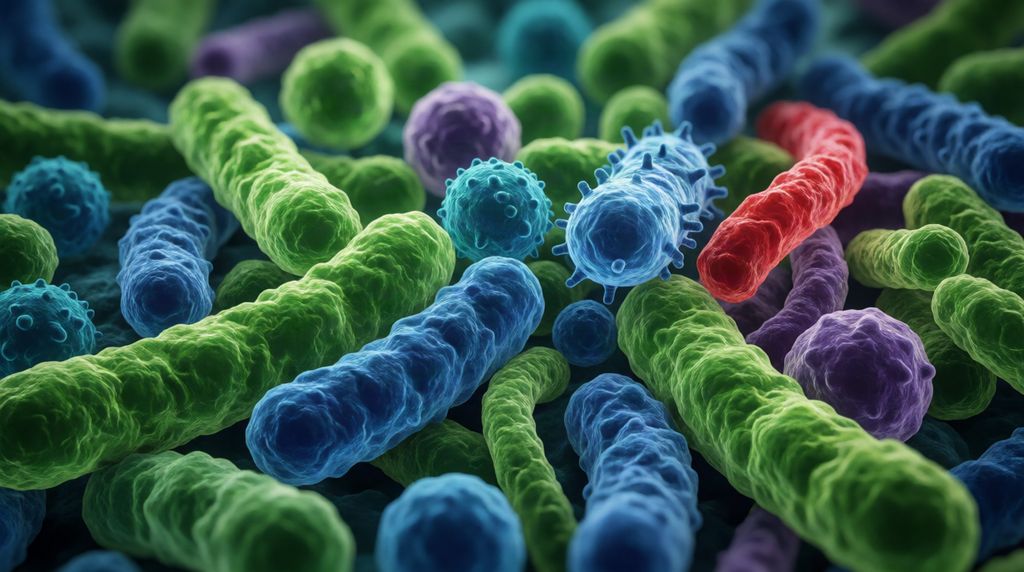
Billions of bacteria live in your gut, together with viruses, fungi and yeasts, forming your microbiome, also known as your gut flora. Your gut is therefore full of life. All these bacteria do a lot of good for your health. But sometimes something goes wrong, and you do not always notice it right away. However, it can have a major effect on your health. How important is your gut flora? And how can you take good care of it yourself? We explain that in this blog article.
Resident and transient gut flora
There are many different types of gut bacteria; estimates range from 100 to 1000 different species. Your gut flora consists of resident and transient bacteria. The resident microorganisms ‘live in’ your gut and are beneficial, essential bacteria that support many vital physiological processes in your intestines. The transient flora enters through food and generally seems to have no function. It is present in your intestines only temporarily and can cause symptoms when there is an imbalance. As you move further along the intestine, the number of gut bacteria increases. Most of them live in the large intestine. There they live 99% without oxygen, so anaerobically. Before birth, your intestines are sterile. The gut flora only develops from the first days of life.
Important inhabitants of your gut
The bacteria in your gut flora are busy microorganisms that work all day long for your health.
- They help you digest food and break down indigestible substances.
- They synthesize vitamins.
- They synthesize substances that protect you against pathogens, such as beta-defensin 2 and secretory IgA.
- They strengthen your mucous membranes.
- They produce short-chain fatty acids, which provide fuel for your intestinal epithelial cells, promote bowel movements and have an anti-inflammatory effect.
- They help detoxify foreign substances.
Your personal fingerprint: your enterotype
No microbiome is the same, even though we all share a large overlap of different microorganisms. The composition and balance of bacteria differ from person to person. In a way, your microbiome is comparable to your unique fingerprint. Research suggests that, broadly speaking, there are three types, each dominated by one bacterial species. We call these enterotypes.
- Enterotype 1: with a large number of Bacteroides
- Enterotype 2: with a strong Prevotella colonization
- Enterotype 3: with a Ruminococcus flora
Enterotype 1: meat eaters
If enterotype 1 predominates, your gut flora is characterized by high numbers of Bacteroides. A Bacteroides flora is good at producing energy from polysaccharides, animal proteins and saturated fats. This type is often predominant in people who eat meat regularly and is rarely found in vegetarians and people who prefer fruit and vegetables. Bacteroides species synthesize vitamins such as various B vitamins and vitamin C. They also influence the absorption of nutrients in the gut. Together with the Bifidobacterium group, they produce fatty acids. They need vitamin B5 and fiber-rich foods for their growth. This enterotype is often found in people who are overweight.
Enterotype 2: grain eaters
If your gut flora is characterized by a strong Prevotella colonization, you probably eat a lot of grains. Prevotella bacteria increase when you eat many grains. The reverse is also true; their numbers decrease when grains are eliminated. Prevotella bacteria produce vitamin B1 and folic acid well. Too many Prevotella bacteria can have negative effects on the intestinal wall. This enterotype is therefore often seen in people with digestive complaints.
Enterotype 3: vegetable eaters
If enterotype 3 is dominant, the flora contains a lot of Ruminococcus. Ruminococcus belongs to the Clostridia species and digests many plant materials. This type therefore needs a lot of vegetables and fiber. It is important that you get enough of these to meet the needs of this flora. This type contains the bacterial species Akkermansia muciniphila, which inhibits obesity and is therefore often found in people with a low body weight.
Much is still unknown about the nature of enterotypes. However, they do seem to be influenced by long-term changes in your eating habits. Eating plenty of fiber and adding beneficial bacteria can have a positive effect.
Prevent imbalance in your gut
The composition of your gut flora therefore depends strongly on what you eat. If you eat a very limited diet, your gut flora will become limited too. As you have read, the bacteria that increase in number are the ones receiving the right food for them. Bacteria that do not receive food can even disappear from your gut flora. So be careful not to create an imbalance in your gut. As soon as certain bacteria gain extreme dominance, they can start causing symptoms. What were once your friends can, because of their numbers, turn into ‘the bad guys’. Shifts in the composition of your microbiome may be linked to many chronic conditions.
Variety is the magic word
A healthy microbiome is a diverse microbiome. How do you achieve that? Very simply: the healthier and more varied your diet, the more nutrients and fiber you provide to your different gut bacteria, and the richer your gut flora becomes. This variety also gives you many different micronutrients, such as vitamins, minerals and phytonutrients. That supports your health.
A good guideline is to eat 25 different types of vegetables, fruit, herbs, nuts and seeds per week. That does take some effort, but it does a great deal of good for your gut. Also keep in mind that if you do not eat certain food groups, you will not get the nutrients from those foods either. A diet rich in plant-based foods can be well supplemented with limited amounts of organic meat, poultry and fatty fish.
You can therefore see your microbiome as the bridge between food and nutrients. And bacteria are not simply good or bad. In conclusion: if you take good care of your gut flora, your microbiome will take good care of you too!