
Dutch Pesticide Food Guide: useful, but with caveats
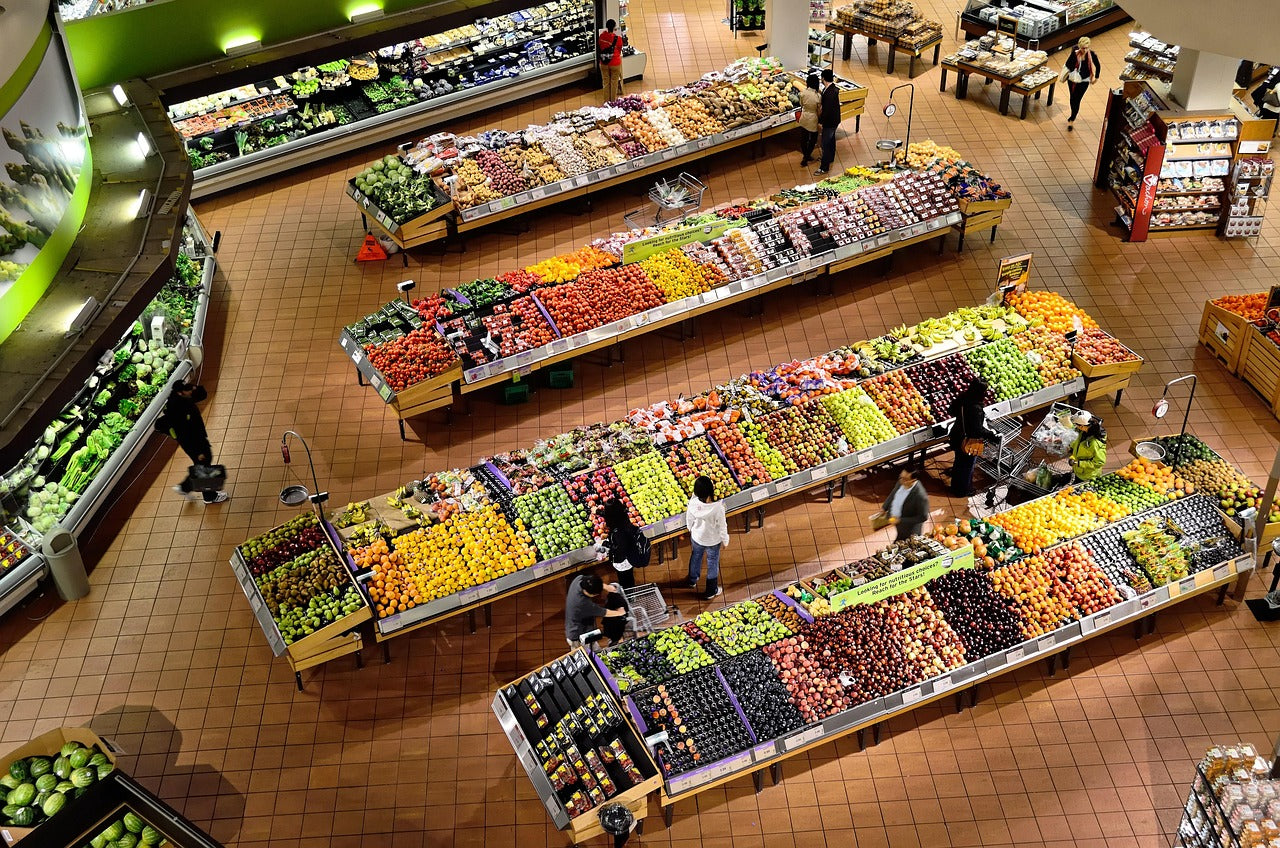
The Pesticide Food Guide from Pesticide Action Network Netherlands (PAN-NL) was created as a practical guide for consumers who want to buy fruits and vegetables with as few pesticide residues as possible.[1] The list is based on approximately 3,000 representative samples from the Dutch Food and Consumer Product Safety Authority (NVWA) and shows the average number of pesticide residues found per product. This makes the guide accessible: you do not need to be a toxicologist to understand that a product with more residues is less “clean” than one with fewer residues. That simplicity is also the reason why the results should be interpreted with caution.
PAN-NL uses the guide to help consumers make informed choices, especially for children and pregnant women, for whom extra caution is advised. The idea is simple: you do not eat less fruit and vegetables, but you choose varieties with a lower pesticide burden more often. This follows the precautionary principle: the fewer pesticides, the better for health and nature. The guide is therefore not intended to discourage the consumption of fruits and vegetables, but rather to make discussions about quality and risk more concrete.
Why PAN-NL Warns About Pesticides
Pesticides are substances designed to kill: weeds, insects, fungi, and nematodes. These substances affect not only the target organism but also biodiversity, water quality, and human health. Of particular concern are PFAS pesticides, endocrine-disrupting pesticides, CMR substances, and genotoxic pesticides. Fruits and vegetables regularly contain a cocktail of multiple residues, while the combined effects of these mixtures remain insufficiently understood.
This warning is especially relevant because, according to PAN-NL, existing approval and regulatory systems do not cover everything. Governments work with limit values (ADI, MRL, ARfD), but these are based on individual substances and say little about mixtures of residues. For vulnerable groups, PAN-NL goes a step further: for babies and toddlers, European standards for baby food are much stricter than what is often found in ordinary fruits and vegetables. “Within the limit” is therefore not automatically the same as “without reason for concern.”
Ranking the Fruits
The strength of the guide is that it makes differences between products visible using the same measurement method. This helps with supermarket choices, especially if you regularly buy the same products and want a simple comparison framework. Products with many residues generally also score high on other concerning characteristics, such as endocrine-disrupting substances and substances that may be carcinogenic or toxic to reproduction. The list therefore serves as an initial signal: not a final judgment, but a practical guide.
At the high-risk end of the list, PAN-NL identifies grapes as a product on which many different pesticides have been found; their risk overview states that as many as 57 different pesticide types have been detected on grapes. Vegetables such as chicory, asparagus, beetroot, and pumpkin perform best. One in five fruit and vegetable products contains residues of PFAS pesticides, and one in three contains residues of substances that may be carcinogenic, mutagenic, or harmful to fertility. High (poor) scores were found for citrus fruits, strawberries, pears, as well as peppers, spinach, and tomatoes. The “cleanest” and “least clean” products may vary from year to year.
Interpretation-Sensitive
PAN-NL warns that the Pesticide Food Guide is a simplification. An important point is that fewer detected residues do not automatically mean that fewer pesticides were used. Some substances are applied early in cultivation, break down quickly, or remain on parts that are not eaten. In addition, the NVWA measures hundreds, but not all, pesticides. As a result, reality may differ in either direction: a product may appear cleaner than it actually was, or more contaminated than the measurements suggest.
Sampling density is also a limitation. According to the FAQ, the NVWA tests approximately 2,000 to 3,000 products per year, while hundreds of millions of products are traded annually. Your specific apple, pear, or mandarin orange has almost certainly not been individually tested.
A more serious issue is the absence of toxicity data in the ranking: the number of problematic substances does not necessarily indicate problematic exposure levels. The extent to which pesticides penetrate the peel varies and is also not included in the results or ranking. Furthermore, PAN-NL states that peeling can remove between half and as much as 95% of post-harvest pesticides—unless those residues are transferred back onto the fruit through handling. This is particularly relevant for problematic citrus fruits.
The Moral
So how should this guide be used? Primarily for routine purchasing decisions. If you frequently buy the same fruits (your favorites or your family's favorites), you can choose the option with fewer average residues when budgets are comparable. Washing and peeling can help, but they have no effect on substances that have penetrated into the product, and peeling also removes nutrients.
The core message is therefore twofold. The Pesticide Food Guide makes hidden contamination visible and provides consumers with a thinking tool, a simple practical aid. However, it is not a perfect safety meter: the ranking is based on averages across different producers, limited measurements, and health effects that are still not fully understood, while actual exposure levels over time also matter.
Those who use the results as a guide rather than a final verdict will get the most value from them. Continue eating plenty of fruits and vegetables, but use the guide to make smarter choices within that healthy habit.
[1] https://www.pan-netherlands.org/eetwijzer (Dutch)

%20was%20created%20as%20a%20practical%20guide%20for%20consumers%20who%20want%20to%20buy%20fruits%20and%20vegetables%20with%20as%20few%20pesticide%20residues%20as%20po...)