
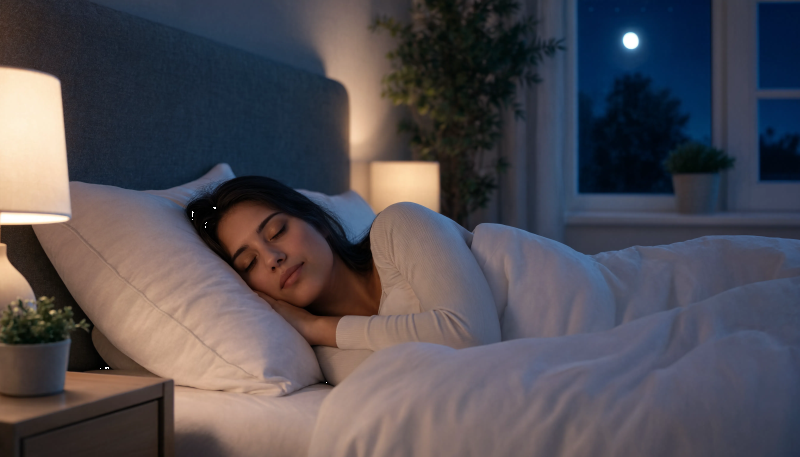
World Sleep Day: Healthy Sleep, Healthy Aging
World Sleep Day, or 'Day of Sleep,' fell on March 13 this year. The theme this year is 'Sleep Well, Live Better.' With no less than 45% of the world's population suffering from some form of sleep problems, good sleep hygiene is an important focus for the overall well-being of very, very many people. World Sleep Day is held every year on the Friday before the week of the spring equinox: day and night are then equal across the entire Earth. World Sleep Day is intended as a celebration of sleep and a call to action for important issues related to sleep, including medicine, education, social aspects, and driving.
Fundamental need
Research shows that we sleep a third of our lives. Sleep is a fundamental human need, just like eating and drinking, and is crucial for our overall health and well-being. It is so normal that we rarely stop to consider the optimal conditions for a refreshing night's rest. Moreover, nowadays we are all too often inundated with artificial light (e.g., streetlights), screens in the bedroom, and, if you're unlucky, noise pollution from modern city life.
Flushing and maintenance
Nevertheless, obtaining good quality and quantity of sleep is one of the most important factors for healthy aging and improving physical, cognitive, and emotional health. During sleep, the brain flushes away harmful substances that have accumulated during the day. Good quality sleep also maintains the 'wiring' of
the brain, which allows memories from the previous day to be stored better and learning experiences to proceed more efficiently. You see: there's a lot to be said for making a good night's sleep a high priority in our daily lives!
Research shows that we sleep a third of our lives. Sleep is a fundamental human need, just like eating and drinking, and is crucial for our overall health and well-being.
Three pillars
In general, good 'sleep hygiene' can be based on three pillars: Duration, Continuity, and Depth. Duration refers to the literal length of sleep. For adults, this means 7 to 8 hours of sleep. Children, incidentally, need more. Continuity: This means that sleep should be undisturbed and uninterrupted. So, no going to the toilet twice, a trip to the fridge, and a quick check of your phone. Depth: Your sleep must be deep enough to allow for recovery. Breathing and heart rate drop to their lowest rhythm during this part of sleep. If you are woken from this sleep, you will be disoriented and will need time to realize where you are. This phase primarily ensures physical recovery.
Sleep problems are a global epidemic affecting approximately 45% of the world's population. It affects their overall health and quality of life.
TEN COMMANDMENTS for good sleep hygiene
(established according to international guidelines)
- Set a fixed time to go to bed and a fixed time to wake up;
- An afternoon nap? No longer than 45 minutes;
- No excessive alcohol consumption 4 hours before bedtime; no smoking;
- Avoid caffeine 6 hours before bedtime. (also applies to chocolate!)
- No heavy, spicy, or sugary foods 4 hours before bedtime. A light snack is acceptable;
- No excessive exertion just before sleeping;
- Use comfortable bedding;
- Find a comfortable sleeping temperature and ventilate well;
- Block all disturbing noise and ensure as little light as possible;
- Reserve the bed only for sleep and sex. Do not use the bed as an office, partial workspace, or recreation room.
Blue light
We've discussed it before: Blue light, particularly from screens, disrupts our sleep. Blue light mimics daylight, which can disrupt the human biological clock. A relatively new disturbance, but despite that, a formidable opponent!
The biorhythm is controlled by a small group of neurons (suprachiasmatic nucleus) located in the hypothalamus. These activate the pineal gland to produce the sleep hormone melatonin. Blue light inhibits the production of this sleep hormone, and looking at this blue light can make it harder to fall asleep. The RIVM (National Institute for Public Health and the Environment) recently determined that prolonged daily use of screens indeed negatively affects sleep.
TIPS 'N TRICKS
BOOK: 'Why we sleep' by Matthew Walker. Highly recommended reading on sleep and mandatory reading for everyone at our company for good reason.