Categorie · Organ Extracts

Organ Extracts

For our ancestors it was customary to eat nose to tail: the whole animal, including the organs. Organ meat contains peptides, fats, enzymes, vitamins and minerals.

The extracts come from the organs of grass-fed cattle, sheep and wild animals and are freeze-dried raw. Per individual organ or as a blend, in capsule form.

Read more ↓
8.9
1,967 reviews · Feedback Company
29
Products in this collection
3
Brands in this collection
Origin
Grass-fed · New Zealand
Processing
Raw freeze-dried
Choice
Single organs and blends
Principle
Nose-to-tail
29 products
Paleo PowdersBeef Organs - Grass-Fed - 180 capsules
Brands

Beef Organs - Grass-Fed - 180 capsules

No reviews yet
€55,95
Paleo PowdersBeef Bone & Marrow - Grass-Fed - 180 capsules
Brands

Beef Bone & Marrow - Grass-Fed - 180 capsules

No reviews yet
€59,95
Paleo PowdersBeef Testicles - Grass Fed - 180 Capsules
Brands

Beef Testicles - Grass Fed - 180 Capsules

★★★★★ 1 reviews
€64,95
Paleo PowdersBeef Brains - Grass Fed - 180 Capsules
Vitamins & Supplements

Beef Brains - Grass Fed - 180 Capsules

No reviews yet
€64,95
Paleo PowdersBeef Blood Protein Isolate - Grass-Fed - 150 gram
Brands

Beef Blood Protein Isolate - Grass-Fed - 150 gram

No reviews yet
€74,95

Which organs are available?

Liver is the best known, but the collection goes much further. Available individually are, among others, liver, heart, kidney, spleen, lung, intestines, brain, pancreas, gallbladder, prostate, testicles, thyroid, thymus, adrenal, bone marrow and tracheal cartilage.

There are also combined organ blends in which several organs are combined, and products that fit the same philosophy without being an organ: beef collagen, beef tallow, bone marrow and wild-caught fish roe.

Why freeze-drying?

In freeze-drying, the organ is first frozen, after which the moisture passes directly from ice to vapour under vacuum. No heat is involved, so the structure of the tissue stays as close as possible to its original state.

The result is a dry powder that goes into capsules and keeps for a long time without preservatives. The difference from dried or heated organ meat lies precisely in that step. The product page states for each product how it has been processed.

Origin and tradition

The organs come from grass-fed cattle and sheep, mainly from New Zealand, where the livestock graze outdoors on pasture all year round. At Wild Mamas, the raw material comes from wild bison.

Using an animal in its entirety is not a new idea. In almost every traditional cuisine, the organs were considered the most valuable part of the carcass. Liver, heart and bone marrow were everyday fare in European farmhouse kitchens, and it was only in the twentieth century that organ meat disappeared from the daily menu in Western Europe.

Single organ or blend?

A blend contains several organs in one capsule, so you get a smaller amount of each organ. A single product gives you exactly one organ in a higher amount. Both are listed on the product page with the number of milligrams per capsule and the number of capsules per daily dose.

When comparing, look at that daily dose and not at the number of capsules per jar. Some products are based on six capsules a day, others on two. If you would rather eat organ meat than swallow it, take a look at bone broth.

Frequently asked questions about organ extracts

What are organ extracts? +

Organ extracts are supplements made from animal organs, usually freeze-dried raw and in capsule form. They contain the nutrients that occur naturally in that organ, such as peptides, fats, enzymes, vitamins and minerals.

Which organs are available individually? +

Including liver, heart, kidney, spleen, lung, intestines, brain, pancreas, gallbladder, prostate, testicles, thyroid, thymus, adrenal, bone marrow and tracheal cartilage. There are also combined organ blends.

What does freeze-dried mean? +

The organ is frozen, after which the moisture passes directly from ice to vapour under vacuum. No heat is involved, so the structure of the tissue stays as close as possible to its original state.

Where do the organs come from? +

From grass-fed cattle and sheep, mainly from New Zealand, and in the case of Wild Mamas from wild bison. The origin is stated on each product page.

Single organs or an organ blend? +

A blend contains several organs in one capsule, so a smaller amount of each organ. A single product provides one organ in a higher amount. Compare products on the daily dose in milligrams, not on the number of capsules per jar.

Organ extracts as nutrient-dense supplements

Organ extract supplements are based on the traditional practice of consuming the whole animal, often referred to as “nose-to-tail” nutrition. Compared to muscle meat, organs naturally contain a broader range of nutrients, including vitamins, minerals, peptides, enzymes, and fats. Organ extracts are used as a practical way to include these nutrients in daily supplementation.

Grass-fed sourcing and processing

The organ extracts in this category are derived from animals such as grass-fed cattle and sheep. The organs are typically raw and freeze-dried to preserve their naturally occurring nutrients, cofactors, and micronutrients. This gentle processing method is commonly used to maintain the original nutritional profile of the organ tissue.

Organ-based nutrition in traditional diets

Organ supplements are often associated with the traditional idea of “like supports like,” meaning that specific organs contain tissue-related nutrients. This concept has been part of ancestral dietary practices for generations and continues to influence the way organ-based supplements are formulated and used today.

Organ extract supplements at Ergomax

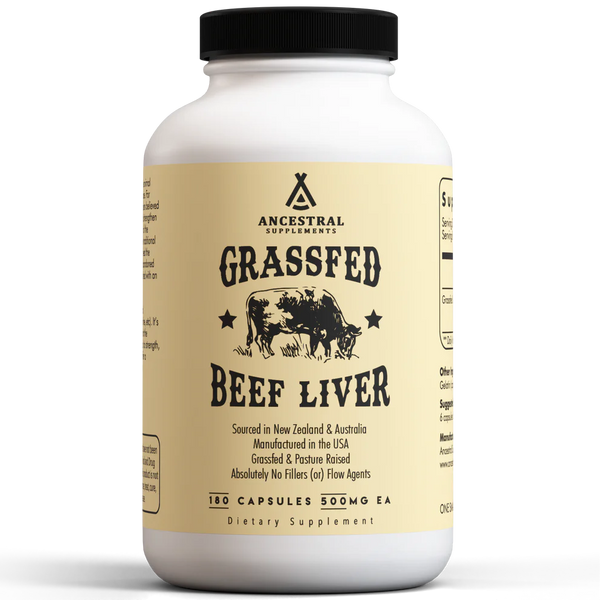
The Ergomax organ extract collection includes a wide range of products from selected brands such as Ancestral Supplements, with options including beef liver, beef intestines, beef heart with liver, and beef brain with liver. The assortment also features high-quality organ extracts from Paleo Powders, such as beef liver, testicle extract, and multi-organ blends. These products offer a practical way to incorporate traditionally valued organ-based nutrients into daily supplementation.