Bone broth Pasture-raised chicken, 90 g.

★★★★★ 4.8 · 4 reviews

Broth powder made from the bones of pasture-raised chickens, simmered for at least 24 hours and then dried. One teaspoon in 100 ml of hot water makes a cup of broth.

Why this product?

From the bones of pasture-raised chickens, raised without hormones or antibiotics

Simmered for at least 24 hours, during which the collagen turns into gelatine

Water filtered three times, free from chlorine and fluoride

Contains gelatine and glycosaminoglycans, including glucosamine, hyaluronic acid and chondroitin sulphate

Contains celery, listed as an allergen on the label

Regular price €44,95
Regular price Sale price €44,95
Sale Sold out
90 grams · 1 teaspoon per serving · €1.50 per serving
Taxes included.
Quantity

In stock

Order before 22:00, processed the same day

Free shipping from €85.00 (NL, BE, DE)

Dutch customer service, free advice

View full details
Bone broth - Pastured chicken - 90 grams

Bone broth Pasture-raised chicken, 90 g.

Order before 22:00, processed the same day
Free shipping from €85.00
Money-back guarantee
€44,95
€1,49 per serving
Quantity
01 / The story

A preparation as old as the kitchen itself.

01, The preparation
02, Form & figures
03, Ingredients & dosage
04, What we are allowed to claim
05, Use & storage
06, Frequently asked questions
Reading time · 9 min

Bones and connective tissue simmer in water over a low heat for hours, until a broth remains. Archaeological finds on several continents show that people were already cooking this way in the Stone Age. Broth of Life still makes its broth that way and then dries it into powder.

The nose-to-tail principle

Behind the tradition lies the nose-to-tail principle: a slaughtered animal is used in its entirety, not just the parts that are quick to prepare. Bones, cartilage and connective tissue used to go into the pot as a matter of course. In the modern kitchen that has largely disappeared, and with it the broth that came from it.

At least 24 hours at a low temperature

The water that goes into the broth is first filtered three times, so that no chlorine or fluoride remains. The broth then simmers for at least 24 hours at a low temperature. That is the part of the process that cannot be rushed: collagen from bones and connective tissue only turns into gelatine with long, gentle heating.

Dried to powder, in Sydney

Broth of Life is a family business from Sydney. The simmered broth is reduced to a paste and dried, which makes the product keep for a long time and easy to measure out. The full composition is on the packaging: bones of pasture-raised chickens, celery, carrot, onion, garlic, Himalayan salt, pepper and apple cider vinegar.

What makes Broth of Life bone broth so special?

Not all bone broths are the same. That becomes clear once you understand what it takes to make a good bone broth. Broth of Life has put together a number of fine bone broths that are special for several reasons. First, the water used for the bone broth is filtered three times through a special system to make sure no chlorine or fluoride remains in it. The soup is then made with plenty of time and attention through a manual and extremely careful production process. Part of this process is simmering it for at least 24 hours, so that collagen and other nourishing components that animal bones and connective tissue are naturally rich in have time to be released. Through years of research and product development, Broth of Life has a head start on others in this sector. Broth of Life was the first in the world to dehydrate its products, so they could be packed in a handy powder form that keeps for a long time and is easy to use. What is more, Broth of Life broth is the first 100% certified bone broth in the world! Broth of Life considers it very important to be transparent about the ingredients it uses. That way you can be sure you are bringing home a high-quality product when you choose Broth of Life’s nourishing ‘golden elixirs’, as the company rightly likes to call its broths.

Bone broth as an age-old tradition

Traditional cultures and wild animals have known instinctively since the beginning of time that bones and cartilage are very nutritious. Their use dates back to the Stone Age. Archaeological finds all over the world have shown that our ancestors made broth from freshly caught animal food sources. An authentic, pure bone broth is still one of the best and tastiest ways to take in the nutrients from animal bones and bone marrow. It is a brew that is still made the traditional way today, by simmering animal bones and cartilage in water at a low temperature for a long time. The flavourful liquid contains dissolved nutrients and is a source of bioavailable collagen (gelatine). This primordial soup is one of the most nutrient-rich natural food sources in the world and has been used for generations as a powerful and beneficial food. Bone broth reminds us of the warm, safe kitchens of our grandparents, where food was prepared with love and brought us together.

The secret of bone broth

A good bone broth contains a range of essential nutrients that have a powerful, beneficial effect on your whole body. The long simmering releases readily absorbable vitamins, minerals and amino acids and converts collagen into gelatine, so that your body can absorb it. Broth also contains specific carbohydrates called glycosaminoglycans. Collagen is a glue-forming protein found in the bones of vertebrates, which is released in bone broth as readily absorbable gelatine. Because of its powerful nurturing properties, bone broth truly deserves to be called a superfood!

The importance of collagen for our body

Collagen fibres are important extracellular proteins in the body. They make up around 25% to 35% of the total protein content of the body and are used by the body to build the distinctive collagen triple helix structure. This structure ensures that tissues and fibres in our body keep their strength, cohesion and flexibility. Up to the age of 25, the body produces enough collagen by itself. After that, production declines and it can be useful to top up this substance, for example through food. More than 90% of the collagen in our body is type I. Type II collagen is found in joints, ribs, nose, larynx and intervertebral discs. Type III is common in the skin and blood vessels. Bovine collagen is the most widely used in collagen supplements and consists mainly of collagen types I and III.

Gelatine versus collagen hydrolysate

In bone broth made from high-quality animal food sources, slow heating converts collagen into gelatine, which the body absorbs easily. The gelatine in bone broth consists of several types of collagen and contains essential nutrients, including useful minerals, fats and special carbohydrates (glycosaminoglycans, often shortened to GAGs). Collagen hydrolysate is a further processed form of gelatine in which enzymes break the proteins down into smaller pieces. Collagen hydrolysate does not contain the extra nutrients found in bone broth. Both forms, however, contain the main essential amino acids, are easily absorbed and have the same body-nurturing properties.

A rich amino acid profile

Did your mother always give you chicken soup when you were ill? Few foods are as powerful and beneficial as a good bone broth. In today’s society, hardly anyone has the time to set aside a whole day for making soup. Broth of Life’s chicken bone broth is slowly simmered with pure water and fresh vegetables, just the way your mother used to make it. The consommé is then reduced to a paste and dried. The result is a pure broth powder with high concentrations of amino acids, including glycine, lysine, glutamine and proline.

Nose-to-tail eating

The nose-to-tail principle is an ethical and sustainable way of processing meat in which every part of an animal is used for consumption. Traditionally it was entirely normal to use an animal in full once it had been slaughtered, but in our modern society we usually limit ourselves to the parts of an animal that are quick and easy to prepare. A shame, because eating organs and glands is actually very valuable! It is wisdom that traditional healers from ancient cultures already knew how to use. It makes sense: every animal organ is a specific source of nutrients, enzymes and bioactive substances that are not only good for the whole body, but also seem to suit the nutritional needs of the corresponding organ in the human body. For targeted support, you can choose to add these specific nutrients to your diet by supplementing with glands and organs. People who eat according to the principles of ancestral eating believe that our body knows how to make good and specific use of the nutrients from healthy animal organs. A fine piece of work by Mother Nature!

In the kitchen

One teaspoon in 100 ml of hot water makes a cup of broth. You can also sprinkle the powder dry over a meal, the way you would use a spice mix, or add it to sauces, stews and risotto. The flavour is mild and savoury, with the vegetables and Himalayan salt clearly present.

About Broth of Life

Broth of Life bone broth is made from high-quality, natural ingredients that are selected by hand. The family business, based in Australia, is the only company in the world that makes certified bone broth in powder form. The company places great value on quality and therefore uses only pasture-raised chickens and grass-fed cattle that are kept in a natural way, so that the animals stay free from hormones, antibiotics and toxins, which are often stored in the bone marrow of animals. Every jar of Broth of Life bone broth is prepared with a lot of love and contains bone broth in powder form, which makes the broth easy to store and use. Not only can you mix the powder with boiling water into a warm drink, it is also a wonderful base for sauces and stews and gives your meals that little bit of extra depth. That way you can easily enjoy all the benefits a good bone broth has to offer, without spending hours in the kitchen yourself!

02 / Form & figures

Figures that mean something.

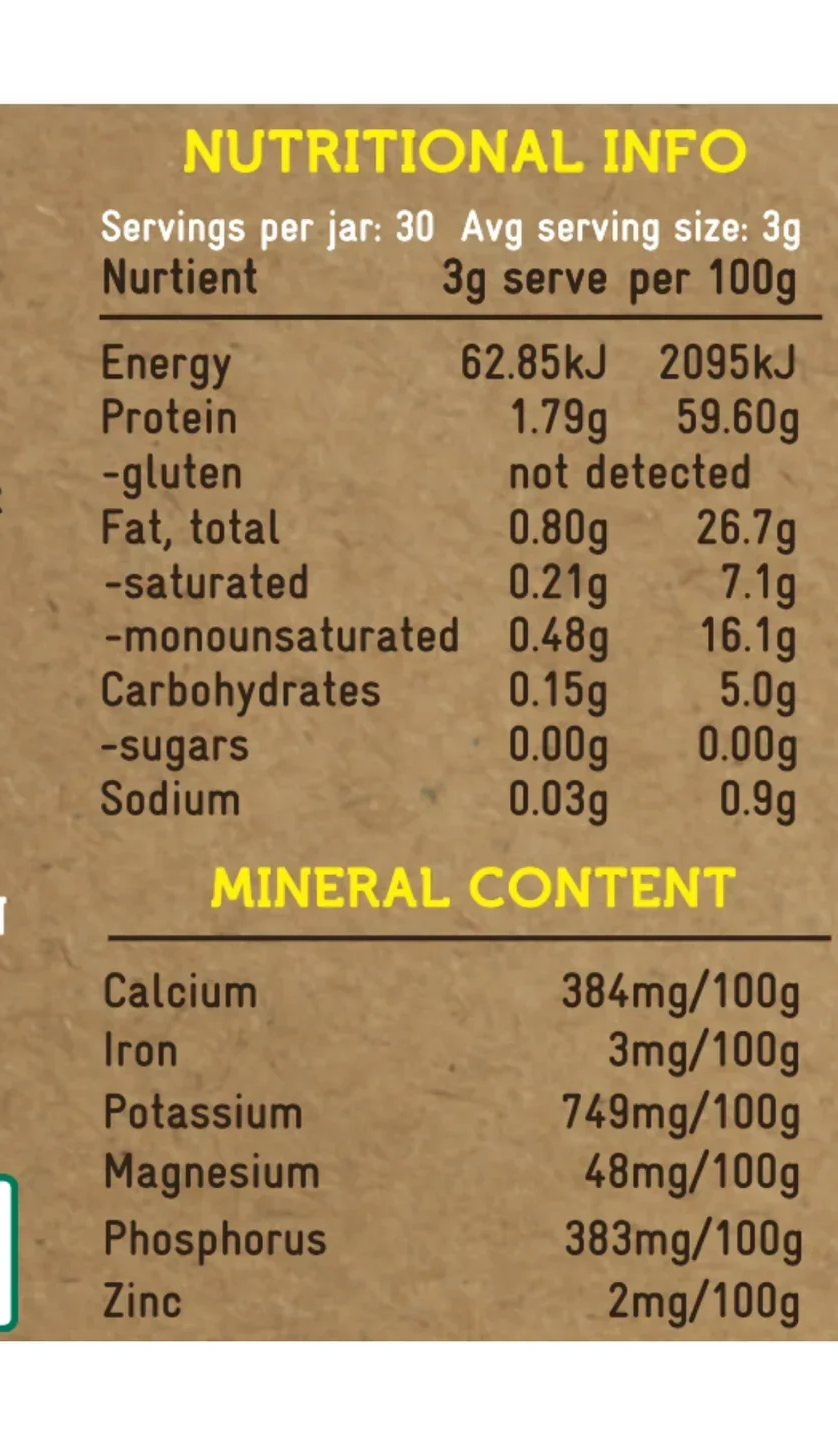
Factual values from the label, nothing more than what has been established.

59.6 g
Protein per 100 grams
About 48% of the energy comes from protein.
24 hours
Minimum simmering time
At a low temperature, so that collagen turns into gelatine.
30
Servings per jar
One 3-gram teaspoon per serving, enough for a month.
100%
Pasture-raised chickens
Raised without hormones and antibiotics.
Ingredients and use

What goes in. And nothing else.

Per serving (1 teaspoon) Component %RI* Origin
Chicken bone broth Dehydrated, simmered for 24 hours* Bones from pasture-raised chickens
Vegetables and herbs Celery, carrot, onion, garlic, pepper* Simmered in the broth
Other Himalayan salt, apple cider vinegar, filtered water* Salt and acid for the extraction

* No reference intake under European nutrition standards has been established for bone broth · contains celery as an allergen · no gluten, soy or added sugars · use: 1 teaspoon in 100 ml of hot water, or dry over a meal · net content 90 grams · store cool, dry and dark with the jar tightly closed

Product information

How to use it. And everything on the label.

How to use

To rehydrate, add 1 teaspoon to 100 ml of water, or use it as a powder by sprinkling it over meals, just like a spice mix.

Contents
90 grams
Allergens
Celery
Other ingredients
Filtered water
Storage
Store in a cool, dry and dark place.
Do not exceed the recommended daily dose.
Food supplements should not be used as a substitute for a varied and balanced diet and a healthy lifestyle.
Keep out of the reach of young children.
* RI = reference intake according to European standards.

Reviews · 4.75 / 5 4

What we are allowed to claim

EFSA claims for bone broth.

Framework
EU 1924/2006
EFSA register
Subject
Bone broth
(chicken)

In Europe, the only health claims we may make about food supplements are those that have been assessed and authorised by the EFSA and are listed in the official EU register. That brands outside Europe go further in what they promise is their framework, not ours.

For bone broth, collagen and gelatine, that register contains nothing. The applications that were submitted have been assessed and not authorised. What you read on this page about collagen, gelatine and the tradition of bone broth is therefore not an authorised health claim.

Protein contributes to the maintenance of muscle mass.

EFSA · AUTHORISED HEALTH CLAIM

Protein contributes to a growth in muscle mass.

EFSA · AUTHORISED HEALTH CLAIM

Protein contributes to the maintenance of normal bones.

EFSA · AUTHORISED HEALTH CLAIM
No authorised claims
EU register
Regulation 1924/2006

There is no authorised health claim for bone broth.

On this page you can read where the bones come from, how long the broth simmers, what else goes into it, how bone broth has traditionally been used and how to use the powder. Bone broth has been eaten since the Stone Age and is the subject of research, but in Europe this has not yet resulted in an authorised claim.

Framework: Regulation (EC) No 1924/2006 and Regulation (EU) No 432/2012. No health claim for collagen, gelatine and bone broth is included in the EU register, and there is no claim on hold for these substances either.

Expert-reviewed

Read and checked by a fellow professional.

Diederik Jansen

Independent researcher · editorial review

The content of this page has been checked for factual accuracy, from the origin of the raw material to compliance with the European rules on health claims. This product contains celery and is not suitable for people with a celery allergy. If in doubt, we recommend a personal consultation.

The content of this page has been checked for factual accuracy, from the origin of the raw material to compliance with the European rules on health claims. This product contains celery and is not suitable for people with a celery allergy. If in doubt, we recommend a personal consultation.

Curator's note
A broth that simmers for 24 hours, dried into a powder you simply keep in the cupboard.
Selected by Ergomax · since 2019

Bone broth is something you either make yourself or buy, and what you buy is usually a stock cube with yeast extract. Broth of Life does it differently: bones of pasture-raised chickens, simmered for at least 24 hours in water filtered three times, then reduced and dried. What remains is a powder with nothing added to it.

We stock this brand because it was the first in the world to have bone broth in powder form certified, and because the ingredient list stays readable: bones, vegetables, salt and vinegar. That is rarer than it sounds.

About the brand

Broth of Life, briefly explained.

Broth of Life

An Australian family business that makes broth the way it should be made.

Broth of Life is a family business from Australia that focuses entirely on bone broth. It uses pasture-raised chickens and grass-fed cattle, water that is filtered three times, and a manual production process with a cooking time of at least 24 hours. The company was the first in the world to dehydrate broth into powder and the first to have that broth certified.

All products from Broth of Life
Quality and production

Made by hand, step by step.

Broth of Life's production process is manual and time-consuming. The water first passes through a filter system three times, the broth simmers for at least 24 hours and is then reduced and dried. The company was the first in the world to have bone broth in powder form certified.

Certified 01
First in the world
Certified bone broth
Origin 02
Pasture-raised chickens
No hormones or antibiotics
Water treatment 03
Filtered three times
No chlorine or fluoride
Preparation 04
Simmered for 24 hours
At a low temperature
08 / Frequently asked questions

What you still wanted to know.

Dried bone broth. The bones simmer in water for at least 24 hours, after which the broth is reduced to a paste and dried. What remains is a powder that you turn back into broth with hot water. Broth of Life was the first company in the world to do this.

Older than agriculture. Archaeological finds around the world show that our ancestors were already making broth from freshly caught animals in the Stone Age. Traditional peoples have long attributed a nurturing power to bone broth, and in many kitchens it is still the first thing you give someone who is ill.

One teaspoon in 100 ml of hot water makes a cup of broth. You can also sprinkle the powder dry over a meal the way you would use a spice mix, or add it to sauces, stews and risotto. The flavour is mild and savoury.

About thirty, based on one teaspoon per serving. With daily use, that lasts a month. The jar contains 90 grams net.

The long simmering releases minerals, fats and amino acids, including glycine, lysine, glutamine and proline, and turns the collagen into gelatine. Broth also contains glycosaminoglycans, a group of carbohydrates that includes glucosamine, hyaluronic acid and chondroitin sulphate. These occur naturally in cartilage and connective tissue.

In bone broth, slow heating turns the collagen into gelatine, together with the minerals, fats and carbohydrates that were in the bones. Collagen hydrolysate is processed further: enzymes break the proteins down into shorter chains, and the other components are not included.

A way of processing meat in which every part of an animal is used, including bones, organs and glands. Traditionally that was a matter of course, but today we usually limit ourselves to the muscle meat. People who eat according to the principles of ancestral eating assume that precisely these less common parts are valuable. Bone broth belongs within that way of thinking.

Yes, celery. It is one of the vegetables simmered along with the bones. Otherwise it contains no gluten, soy or added sugars. Always check the label on the packaging.

Only claims that the EFSA has assessed and authorised. For bone broth, collagen and gelatine, there are none. That is why this page covers the origin, the preparation and the use, but makes no statement about effects. That brands outside Europe handle this differently is their framework, not ours.

Can't find your question? We're happy to help.
Call customer service →
Pairs well with

Combining bone broth in the kitchen.

People who cook with bone broth often use gelatine or collagen as well. This is a popular combination, not a set of random upsells.

Broth of Life pasture-raised chicken bone broth in a 90 gram glass jar
Bone Broth Pasture-Raised Chicken
Grass-fed beef gelatin front - Ergomax
Beef Gelatine
The kitchen routine

Broth and gelatine, together.

  • Broth powder from the bones of pasture-raised chickens, simmered for 24 hours
  • 23.6 grams of protein per serving, sets as it cools
Both products show a product property, not a health claim.
€67,90

Bone Broth Pasture-Raised Chicken €44,95 + Beef Gelatine €22,95

Or add items individually
Own brand

Collagen Hydrolysate Wild Marine Fish · 400 grams

Type I collagen from wild-caught marine fish, a single ingredient with no additives.

€31,95
Own brand

Magnesium · Liposomal formula · 100 capsules

100 mg magnesium per capsule, as hydroxide from seawater, in a liposomal carrier.

€24,95