



Whey, the by-product of cheese
Anyone who makes Gouda cheese is left with a lot of liquid. Ten litres of milk make about one kilo of cheese; the rest is whey: a yellowish, slightly sour liquid containing lactose, minerals and protein, among other things. For centuries, whey on Dutch farms went to the pigs. Only in the twentieth century did dairy factories discover that the protein in whey is of high quality, and this by-product became a raw material.
From whey to isolate
To turn whey into an isolate, the liquid is passed through ever finer filters. Lactose, fat and minerals pass through, the protein stays behind. Momentous uses microfiltration at low temperature, so that the proteins are not altered by heat. The result is a powder with more than 85 percent protein: 23.27 grams of isolate contain 20 grams of protein, with only 3 grams of carbohydrates per scoop.
European milk, American brand
Momentous is an American brand, but the whey comes from European dairy farmers with grass-fed cows. Momentous chooses this because of the European rules: the growth hormone rBST, which may be used on cows in the United States to increase milk production, has been banned in the EU since 2000. In this way, European whey comes back to Europe by way of an American brand.
What is in a scoop
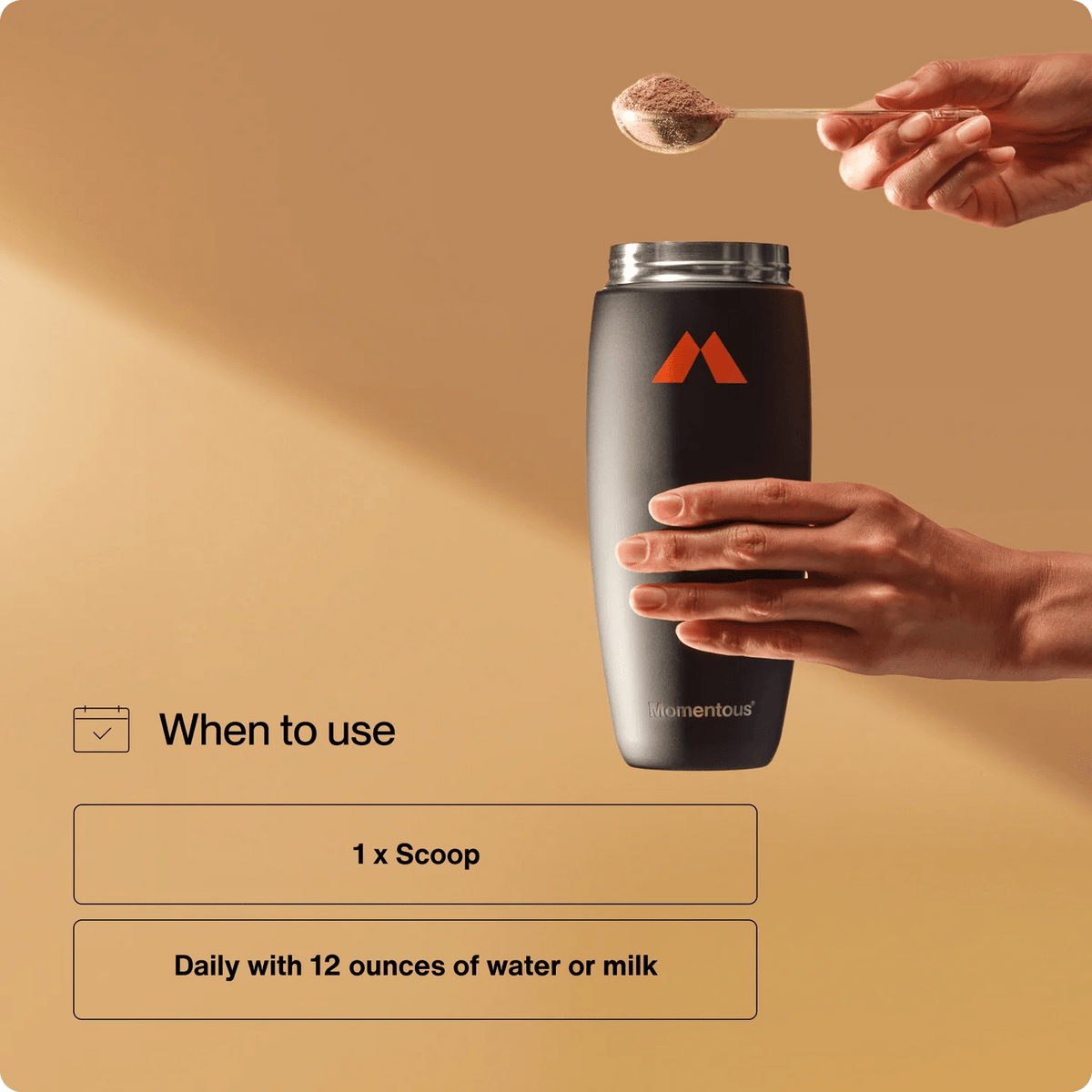
A 26.5 gram scoop contains 100 kcal, 20 grams of protein and 3 grams of carbohydrates. It also naturally provides 90 mg calcium, 140 mg sodium and 115 mg potassium. The 636 gram jar is good for 24 servings. Mix one scoop with about 350 ml of water or milk.
Leucine and the other amino acids
Protein consists of amino acids, and whey protein contains all nine that the body cannot make itself. Each scoop contains, among others, 2.3 grams of leucine, 1.5 grams of isoleucine and 1.2 grams of valine, the three so-called branched-chain amino acids. Leucine receives a lot of attention in sports nutrition research. The full amino acid profile is on the label.
ProHydrolase and pineapple
Each scoop contains 200 mg of added ProHydrolase, a blend of proteases: enzymes that cut protein into smaller pieces. According to the label, they come from Bacillus bacteria and from pineapple. Pineapple naturally contains the protein-splitting enzyme bromelain, which is why a gelatine pudding with fresh pineapple never sets.
Protein, muscles and bones
Three health claims are authorised for protein. Protein contributes to a growth in muscle mass, to the maintenance of muscle mass and to the maintenance of normal bones. They apply to products that are at least a source of protein. In this whey, about 80 percent of the energy comes from protein.
Three flavours
The whey is available in vanilla, chocolate and unflavoured. The nutritional values and ingredients on this page are those of the vanilla version, sweetened with steviol glycosides and rebaudioside A from the stevia leaf. The chocolate version also contains cocoa. The unflavoured version is intended for mixing into coffee, oatmeal or recipes without changing the taste.
NSF Certified for Sport
NSF Certified for Sport is the certification mark recognised by American professional leagues such as the NFL and MLB. Every batch is tested for more than 270 substances that are banned in sport, and it is checked whether the product contains what is on the label. Especially with protein powders, where contaminants are regularly found in the industry, that is an important reason for athletes to choose this product.
Momentous and Ergomax
Since 2024 Ergomax has been the exclusive distributor of Momentous on the European mainland and ships throughout Europe. Together with creatine and omega-3, protein is one of the three products that Momentous sees as the basis of its range.


