
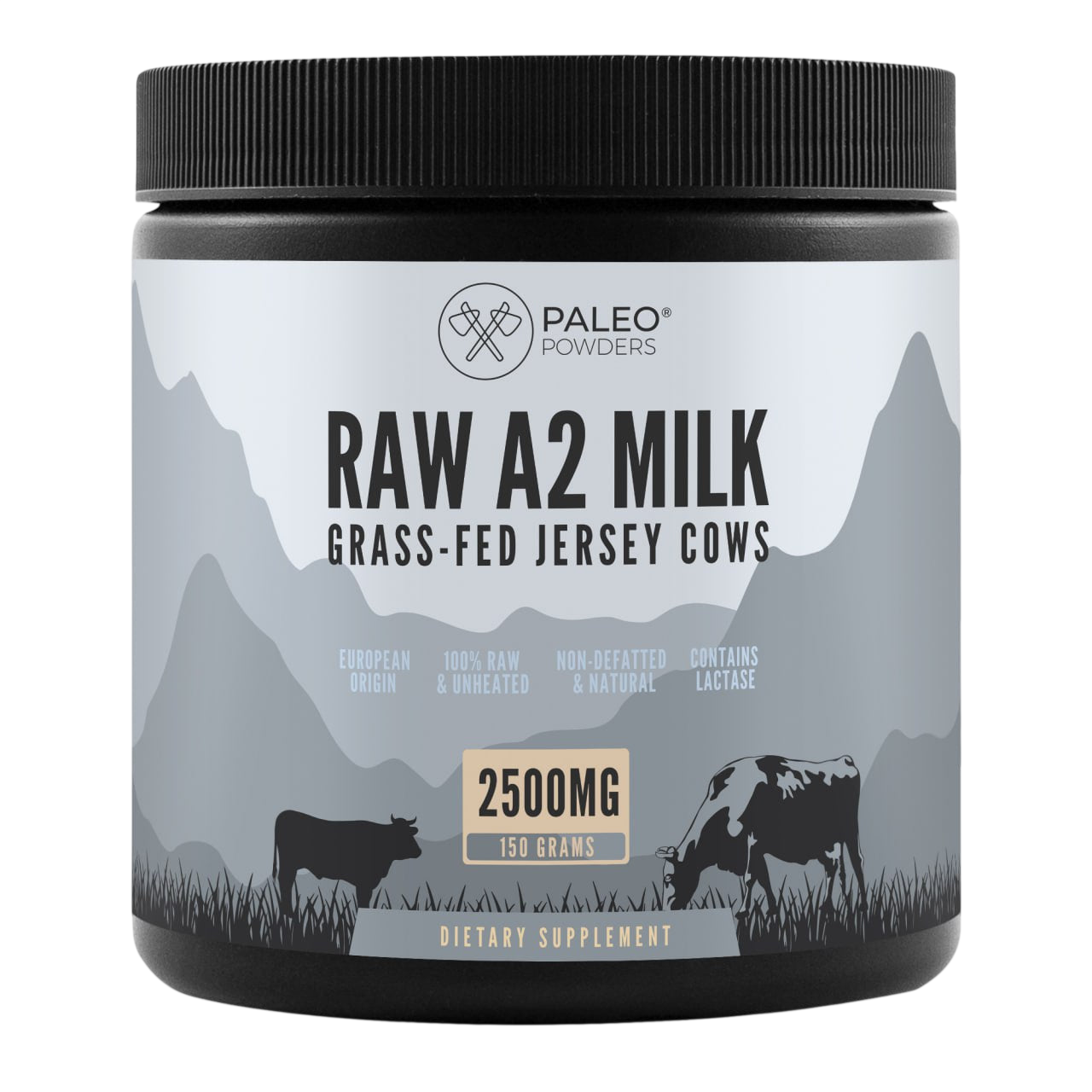
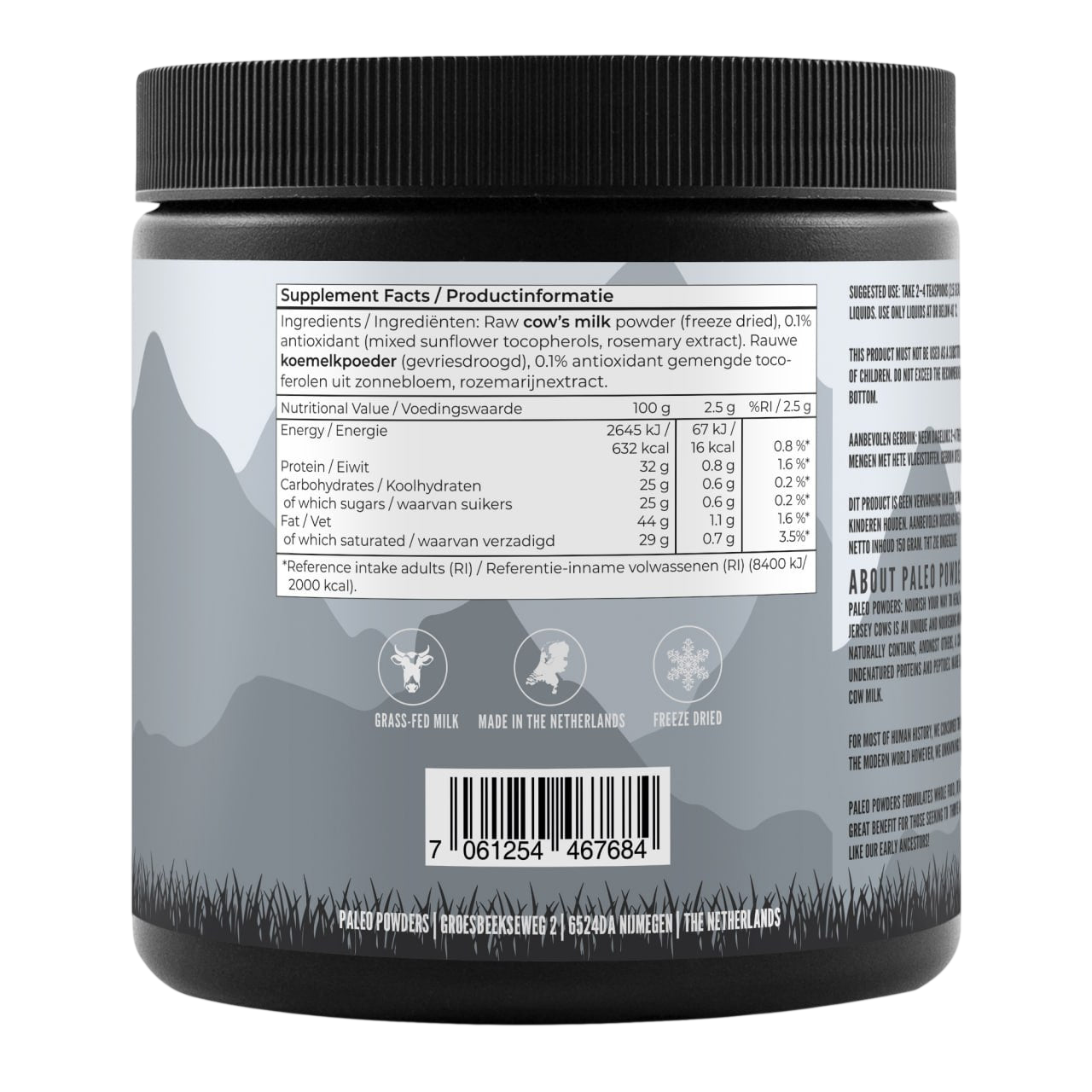
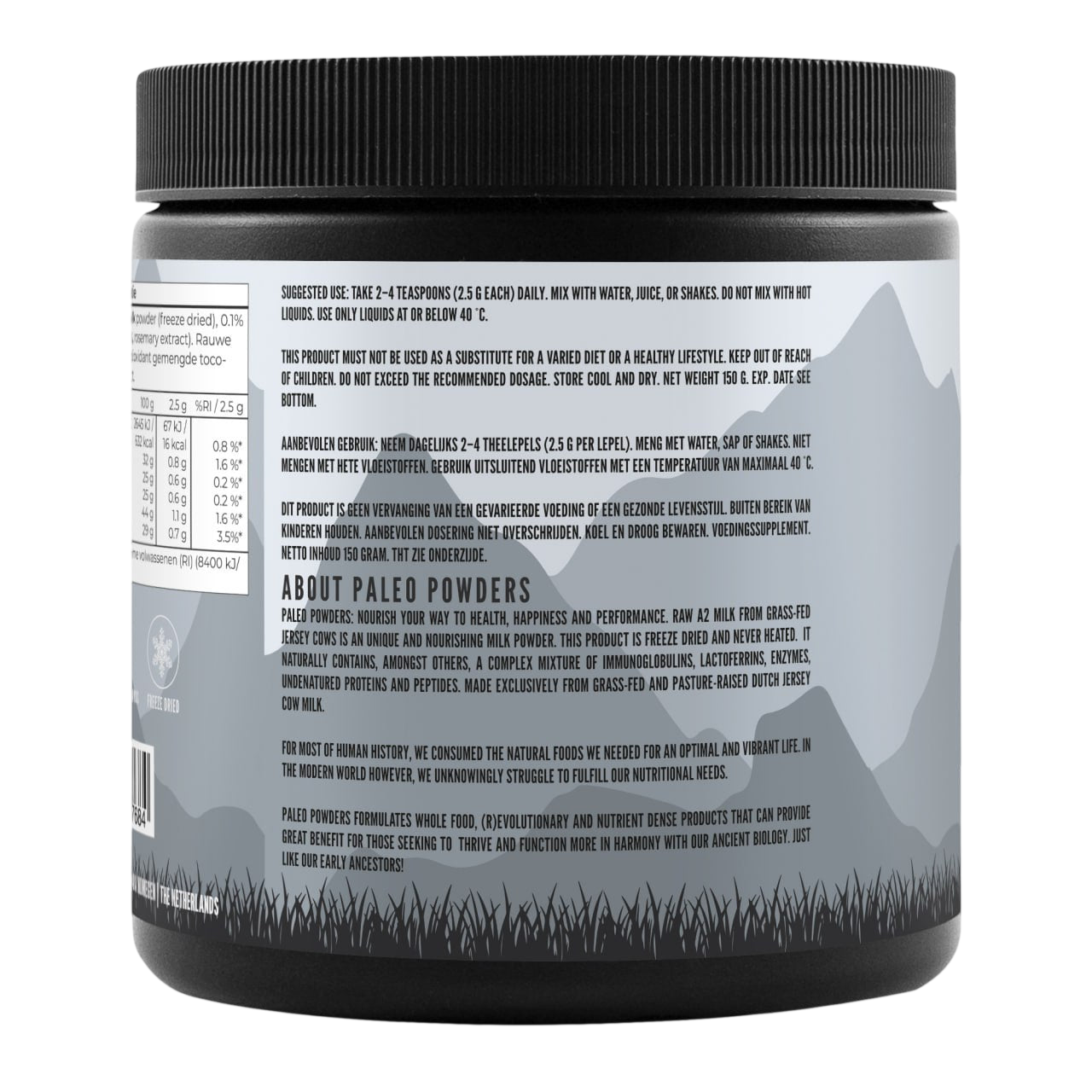
Raw A2 Milk - 150 grams
 Money back guarantee + €15.00
 Order before 10pm, delivered within 2 days!
 Free shipping above €75.00 (NL, BE, DE)
This milk powder is not a standard dairy product. It is made from raw A2 milk from exclusively Dutch grass-fed Jersey cows and gently freeze-dried, without intensive heat treatment. While many milk powders are produced through industrial spray-drying processes, a mild process is chosen here that respects the original structure and composition of the milk as much as possible. The result is a pure, traditional product with a full and creamy taste.
A key characteristic of Jersey milk is the natural presence of A2 beta-casein, an original protein variant that has existed for generations in some traditional cattle breeds. A2 milk protein differs by one amino acid from A1 protein and is associated with optimal digestibility.
In this freeze-dried raw A2 milk powder, this centuries-old tradition comes together with modern processing technology. By carefully freeze-drying raw milk from grass-fed Dutch Jersey cows, a stable and pure product is created that fully respects the character of this special milk.
- Exclusively A2 milk (no A1 casein)
- Sourced from one Dutch farm
- Grass-fed cows with pasture access
- No industrial spray-drying technique
- Preservation of the natural fat structures
- Naturally present enzymes and bioactive components
- Produced in small, controlled batches
- Full and creamy taste
- With a smidge of rosemary extract and natural vitamin E to preserve freshness
The special nature of raw A2 milk
Milk is naturally a complex food with a wide variation of natural components. In one product, proteins, fats, minerals, and other compounds come together that together form the unique composition of milk.
Jersey milk is known for its rich composition and high nutritional density compared to many other cow breeds. Through the freeze-drying process, the original composition of raw milk is preserved as much as possible, without intensive heating.
Naturally a complete food
Research into milk shows how complex this natural system is. It is estimated that between 1,000 and more than 2,000 different proteins and peptide fragments are present, including intact proteins, isoforms, and small peptides. In addition, more than 2,000 to 4,000 different lipids have been identified. The number of small metabolites ranges from hundreds to more than 1,000, and milk also contains dozens to hundreds of different oligosaccharide structures.
Milk also contains approximately 20 to 30 different minerals and trace elements, often in multiple compound forms. Furthermore, hundreds of nucleic-acid-related molecules are present, including microRNAs.
Rich in milk fats
Contains both saturated and unsaturated fatty acids, including complex lipids such as phospholipids and sphingolipids.
Casein and whey proteins
A natural combination of milk proteins, including casein and whey proteins.
Natural source of micronutrients
Milk naturally contains various micronutrients such as calcium, phosphorus, potassium, magnesium, riboflavin (vitamin B2), vitamin B12, and nicotinamide riboside (NR).
Contains milk fat globule membrane (MFGM)
The milk fat globule membrane (Milk Fat Globule Membrane, MFGM) contains various phospholipids, glycolipids, and specific milk proteins that are naturally present in milk.
Bioactive components in milk
Various bioactive components naturally occur in milk, including exosomes with microRNAs, nucleotide compounds such as NAD⁺ and NADH precursors, nucleotides (AMP, CMP, GMP and UMP), and nucleosides (adenosine, cytidine and uridine). In addition, milk also contains components such as immunoglobulins (IgG, IgA and IgM) and lactoferrin.
Jersey milk: a long tradition
From the green island of Jersey to the Dutch grass meadows of today: milk from Jersey cows has a long history.
The Jersey breed originates from the Channel Island of Jersey. Farmers maintained the breed carefully pure for centuries by selectively breeding for high-quality milk. Since the late eighteenth century, only animals with particularly rich and nutritious milk were used for breeding programs. This led to the development of a compact, strong cow known for her exceptionally creamy milk with a high natural content of fat and protein.
Jersey milk was valued early on for its quality, taste, and nutritional density, not for the quantity of liters, but for the richness per drop.
From milk powder to milk
Do you want to restore this milk powder to its original state? Then use water that is cold or at room temperature (never mix the powder with warm or hot water). First fill a glass with water and then gradually add the powder. Sprinkle it little by little into the water to prevent clumping. Then mix gently by hand or use an electric mixing device with a few short pulses.
Then place the mixed milk in the refrigerator for at least 4 hours. This helps to make the taste and structure more similar to that of fresh raw milk. For one glass of milk, use approximately 15 g of powder per 250 ml of water.
Choose options
Money back guarantee + €15.00
Order before 10pm, delivered within 2 days!
Free shipping above €75.00 (NL, BE, DE)