
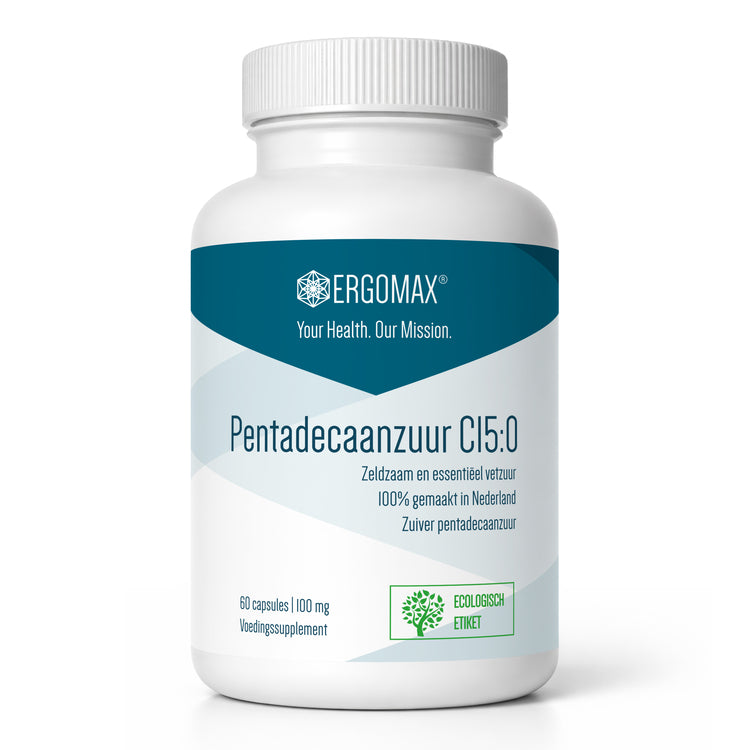
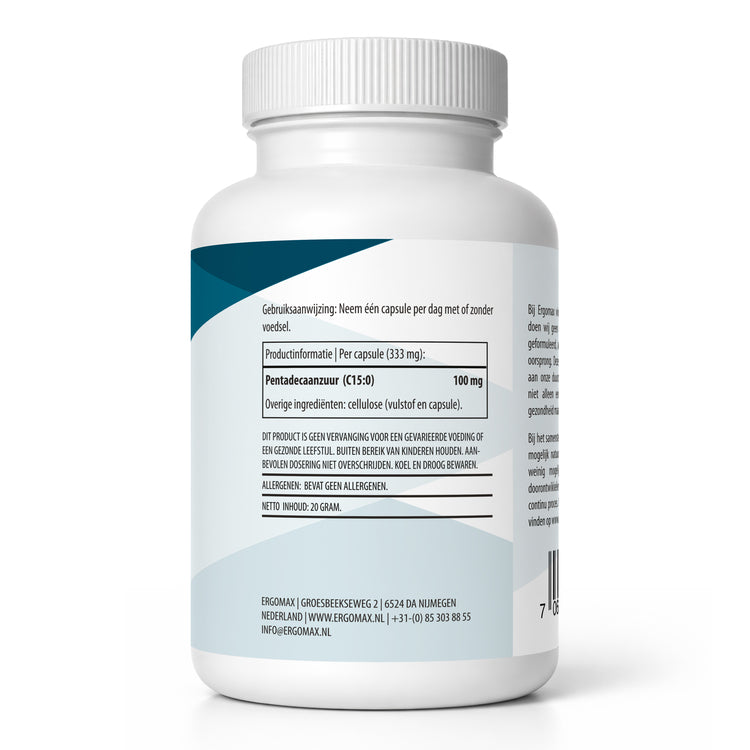
Pentadecanoic acid (C15:0) - 60 capsules
 Niet-goed, geld-terug garantie + € 15,00
 Tot 22:00 bestellen, morgen bezorgd!
 Gratis verzending boven de €75,00 (NL, BE, DE)
Pentadecanoic acid (C15:0 or PDA) is a human essential odd-chain saturated fatty acid with a range of functions. Essential fatty acids serve as building blocks for cell membranes, structural integrity and precursors to signaling molecules. This makes C15:0 a true pleiotropic nutrient, especially since it also activates remarkable pathways of human biology.
It is generally known to health enthusiasts that all fats are not equal. Some are common, familiar, and everywhere. Others are rare, quietly present, and structurally different. Pentadecanoic acid — better known as C15:0 — belongs to the latter group.
C15:0 is an odd-chain saturated fatty acid, meaning it has the odd number of 15 carbon atoms instead of the more typical even numbers found in most dietary fats. This small structural twist makes it stand out in the world of lipids — not flashy, just fundamentally different.
A Fat with a Past
C15:0 naturally occurs in small amounts in traditional food items, particularly those involving ruminant animals. Full-fat dairy products like butter and ghee but also grass-fed beef tallow have historically provided trace levels of odd-chain fatty acids, including C15:0.
As modern-day diets have been shifting more toward refined and low-fat products, exposure to these fats quietly declined. Today, C15:0 is far less common in everyday nutrition, which has sparked renewed interest among researchers, formulators, and ingredient developers.
Why Odd Matters
From a chemistry standpoint, C15:0 is:
- Fully saturated, making it highly stable
- Resistant to oxidation, even compared to many other fats
- Structurally unique, due to its odd number of carbons
This combination gives C15:0 a clean, predictable profile that behaves differently from more familiar saturated fatty acids — a detail that has made it increasingly visible in lipid analytics and formulation science.
A Modern Research Favorite
In recent years, C15:0 has stepped into the spotlight as a distinct lipid of interest. Rather than being lumped into generic “fat” categories, C15:0 is now often examined on its own merits. Pentadecanoic acid’s (C15:0) potential is quite huge, especially concerning its bioactive metabolites. Nutritional studies of C15:0 deficiency are needed to better assess and decrypt its essentiality.
From Nature to Ingredient
Our C15:0 is a pure and single ingredient 100% synthesized and capsulated in the Netherlands. These properties make it an attractive option for modern consumers where precision, quality, and reproducibility matter. With 100 mg of pentadecanoic acid per cellulose capsule the product is 100% vegan and suitable for anyone looking to explore the benefits of C15:0.
Why supplementation with C15:0 can make a difference
C15:0 (PDA) is not synthesized in sufficient quantities endogenously, so it must be provided by the diet, mainly through dairy fat, although other types of food can also contribute to the dietary intake of PDA. Essential fatty acids are described as not being endogenously synthesized in quantities yet required for maintaining physiological health. PDA might meet both criteria to be described as essential. Research on both criteria are needed to enhance knowledge on this odd chain fatty acid with promising impact as potential protective supplement nutrient.
The Takeaway
Pentadecanoic acid (C15:0 or PDA) is:
- A naturally occurring but increasingly rare fatty acid
- Structurally simple, yet chemically distinctive
- A bridge between traditional food sources and modern lipid science
PDA is a bioactive fatty acid with activities associated with health benefits in humans and lower PDA intake or plasma concentrations being associated with poorer physiological outcomes.
Dietary PDA intake appears to be the only way to ensure its presence in the body,
It’s a reminder that sometimes, the most interesting ingredients aren’t new inventions — they’re rediscoveries.
Choose options
Niet-goed, geld-terug garantie + € 15,00
Tot 22:00 bestellen, morgen bezorgd!
Gratis verzending boven de €75,00 (NL, BE, DE)