



Eight strains
The formula contains three Lactobacillus strains (L. plantarum, L. gasseri and L. salivarius) and five Bifidobacterium strains (B. bifidum, B. infantis, B. longum, B. breve and B. lactis). According to the maker, these are all strains that do not produce histamine or that break histamine down.
Small doses
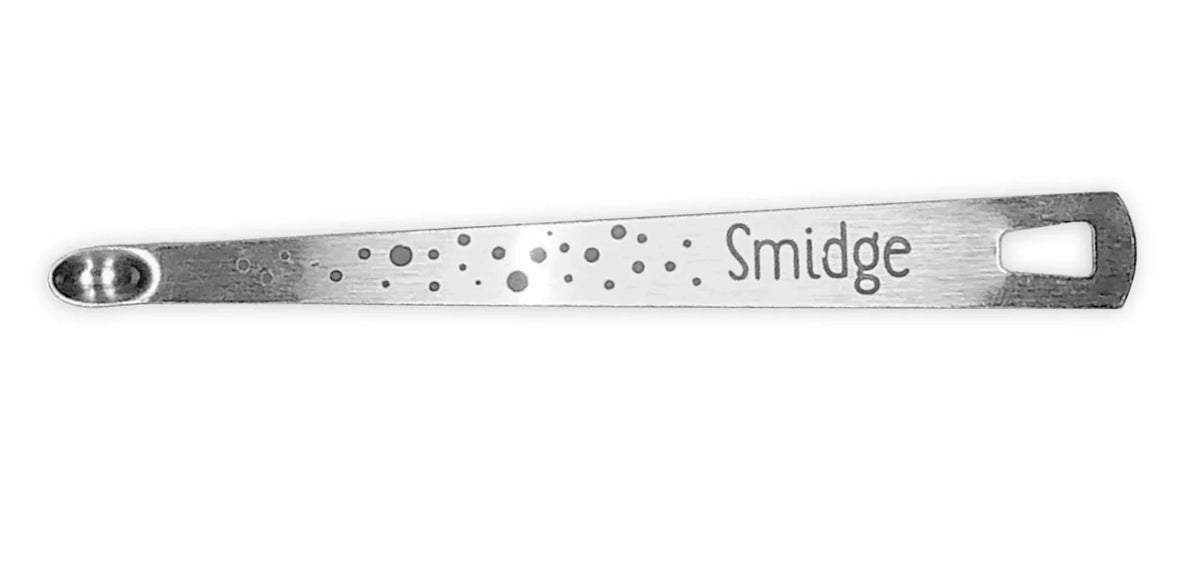
One scoop weighs 20 mg and contains 3 billion CFU. A 20-gram jar therefore holds around a thousand scoops. The predecessor, GutPro from Organic3, worked with larger doses; with this powder you can start much smaller and build up gradually.
Use and storage
Take one scoop once a day with food, or as your healthcare provider advises. Keep the jar in the fridge, keep the scoop clean and dry and do not add the powder to hot drinks or hot food.
Smidge Sensitive Probiotics Powder
The World Health Organization defines probiotics as living microorganisms that have a positive effect on health when consumed in sufficient quantities. Smidge developed the Sensitive Probiotics Powder with 8 carefully selected, neutral strains of probiotic bacteria and without other additives such as excipients, flavourings and preservatives. This makes this unrivalled hypoallergenic formula particularly suitable for even the most sensitive of users. Compared to its predecessor (GutPro Probiotics Powder, under the name Organic3), considerably smaller doses have been chosen here, so that you can build up the dosage much more easily and adjust it to the amount that feels right for your body.
The uniqueness of Smidge Sensitive Probiotics Powder
Powerful, condensed and pure, Smidge Sensitive Probiotics Powder contains a carefully composed blend of the neutral bacterial strains Lactobacillus gasseri, Lactobacillus salivarius, Lactobacillus plantarum, Bifidobacterium bifidum, Bifidobacterium breve, Bifidobacterium infantis, Bifidobacterium longum and Bifidobacterium lactis. Combined, they ensure that each dose contains 3 billion CFUs. The handy measuring scoop included ensures that you can measure and build up exactly the amount that suits you and your family members. In addition, no flavourings, excipients, fillers or preservatives have been added to the supplement, and the blend contains only histamine-neutral or histamine-degrading bacterial strains. The probiotics are therefore suitable for people with sensitivities and allergies, and fit in with dietary styles and diets such as paleo, ketogenic, GAPS, SIBO, Body Ecology and with a soy-free, gluten-free, dairy-free or casein-free diet.
About the intestinal flora
Our intestinal flora is a very complex ecosystem, about as unique as our fingerprint! In our intestinal flora, also called the microbiome, essential substances are produced, including vitamins and neurotransmitters. The microbiome also plays a key role in the digestion of food and in the proper absorption of vitamins, minerals and other nutrients. The microbiome is therefore an extremely important ecosystem in our body. For all these processes to run smoothly, the body works together with the microbes present in the intestines, including bacteria. These intestinal bacteria can be divided into desirable and less desirable bacteria, and into passing species and permanent residents. A normal intestinal flora is in balance.
How do bacteria and enzymes work?
Billions of microorganisms live in our intestinal flora, each with its own function within the larger whole of our digestion. So there is a partnership between our body and the bacteria that populate our gut. When these species are in balance with each other, we speak of a healthy intestinal flora. Enzymes are able to speed up specific processes in our body, sometimes as much as a trillion times! They are little chemical factories that are rightly called the workhorses of our body. Digestive enzymes therefore act as a kind of catalyst in our intestinal system. You are not what you eat, but what you absorb. So cherish these little helpers in your intestinal system!
Benefits
Carefully formulated blend of 8 well-tolerated bacterial strains. Contains 3 billion CFUs per dose and comes with a handy measuring scoop. Smidge Sensitive Probiotics Powder contains only histamine-neutral or histamine-degrading bacterial strains and nothing else. Smidge Sensitive Probiotics Powder is allergen-free and contains no added substances, making the powder suitable for sensitive users and for diets such as paleo, GAPS, gluten-free, soy-free, casein-free, ketogenic and Body Ecology.
The unravelling of our intestinal flora
Knowledge about our intestinal flora is constantly developing. We actually know very little about this complex system as yet and our current knowledge is just the tip of the iceberg, but almost all experts agree that it is worthwhile to take a closer look at our intestinal flora. For example, did you know that bacteria communicate with each other in a special way? Throughout the body, including in the intestines, bacteria are in constant conversation with each other via a mechanism we call quorum sensing, and they attune their behaviour to each other via substances that they secrete, namely signal molecules. Among other things, they can tell whether there are many of their own kind nearby or not, and collaborate with them in ingenious ways. Thanks to their special communication system, bacteria can sense whether they are alone or with others, and this enables them to work together in ways that we are only now slowly starting to understand.
The history of probiotics
Although the term probiotics dates from 1953, the principle is much older. The first traces of the use of probiotics date back to the Neolithic period, between 10,000 and 5,000 BC. Cattle herders in the Middle East at the time kept milk in sacks made from goat skins. Because the sun was shining on it, the milk began to ferment through a combination of lactic acid bacteria and yeasts. The origin of other fermented foods, such as kefir, beer and wine, also dates back to about 7,000 BC. The importance of these sometimes accidental discoveries, however, came to light much later, in the 19th century. In this century, the French chemist and biologist Louis Pasteur developed his theory that the cause of many diseases was a tiny living being, which he called a microorganism. This microbe theory is one of the most important discoveries in medical history and has led to many new insights in the field of microbiology. However, the real science of probiotics in Europe only got going in the 1990s, and since then probiotics have been the subject of countless clinical studies.
Compiled with care
Smidge products are carefully composed in small batches and do not contain unnecessary additives, making them of optimal quality and versatile. Because the products are developed on the basis of the latest insights and because they contain specific neutral bacterial strains, they are well tolerated by almost everyone. The products are therefore also extremely suitable for people with sensitivities or allergies, and they also fit within diets such as the GAPS diet and the paleo diet.
About Smidge
The three founders of Smidge, formerly Organic3, understand that good nutrition is the key to good health. All three have struggled with health complaints in the past and have made it their life's work to guide others towards good health through nutrition. Smidge supplements therefore focus specifically on digestion and the gut, and the formulations are composed with the greatest possible care and without unnecessary additives. The name Smidge means a small quantity, underscoring the fact that they always produce their products in small batches in order to guarantee extra quality. This makes the products suitable for the most sensitive of users and achieves the best possible result. In putting together their unique product line, the work of Dr Weston A. Price and Dr Natasha Campbell-McBride is an important source of inspiration. At Smidge, they have been working together for years on their mission to offer products with essential nutrients that can support the digestive system and help maximise the absorption of nutrient-rich food.


