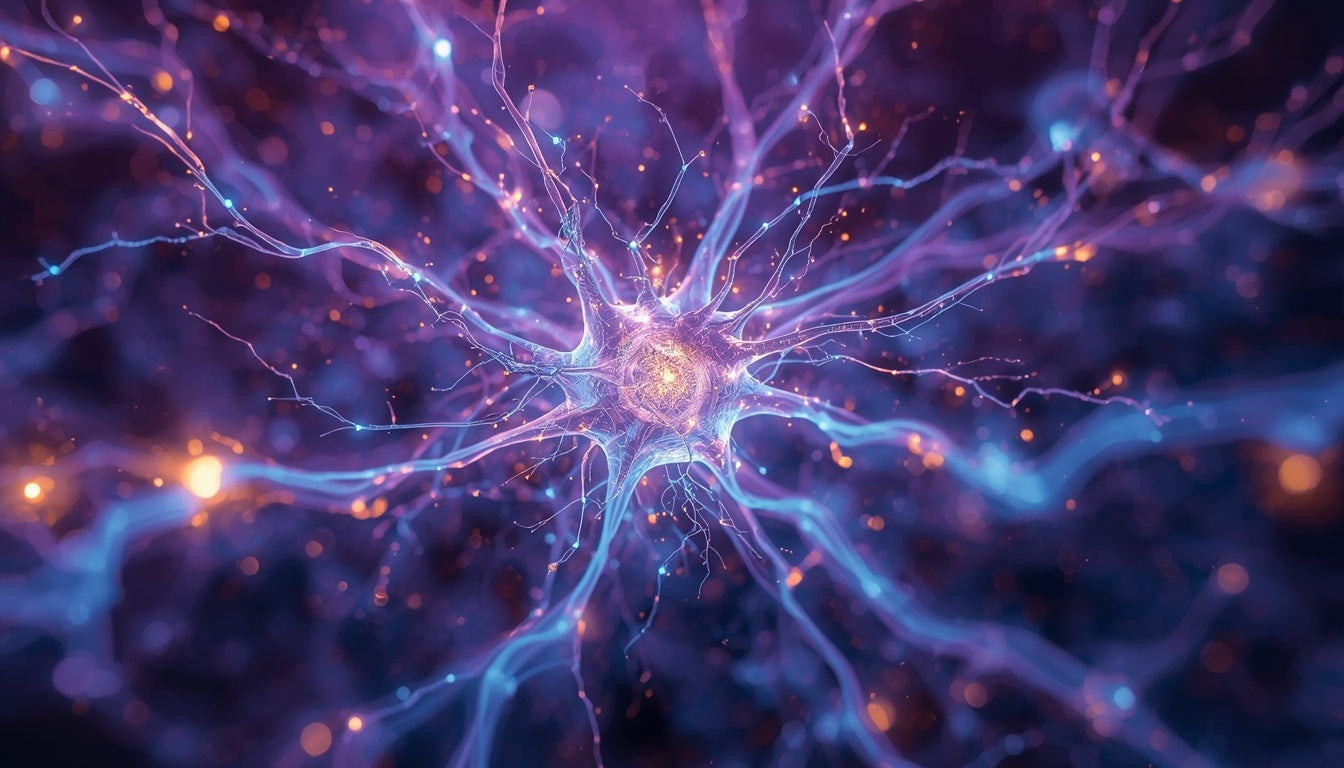

Pain: A feeling, an emotion, an illness or a symptom?
Chronic pain is a major source of human suffering. But what exactly is pain and how do you experience it? Researchers, philosophers, psychologists, and doctors have grappled with this question throughout the centuries. Is it a passion, an emotional state, or a disease? The attempt to understand pain and find an appropriate response to it is one of the oldest challenges in the history of medicine.
The concept of pain has only been disassociated from religious and spiritual matters since the 19th century. Even later, around the 1990s, pain was recognized as an actual physical condition; a key sign of an unhealthy state. Just like blood pressure or breathing rate. Since then, pain has been seen as a frequent symptom of various diseases, and doctors worldwide rushed to alleviate it through painkillers.
Strangely enough, on the other hand, we continue to hear about mental health, psychological pain, and how people can die - because they can - from a 'broken heart'. Where then lies the distinction between physical and emotional pain? And should we, after all, consider pain a feeling? In short: A symptom of a physical illness, or a feeling?
- The ancient Greeks considered pain a passion - an emotion rather than a sensation like touch or smell. During the Dark Ages in Europe, pain was seen as a punishment for sins. A spiritual and emotional experience for which relief could be offered through prayers rather than medicines.
Most doctors would argue that pain is a physical matter. When the body detects a harmful stimulus, pain receptors signal the brain to assess the threat and initiate a corresponding action. In this form, pain is not related to feelings or emotions; it is simply a bodily function. A purely physical matter.
Research shows that each person experiences pain differently due to genetic and environmental reasons. There is such a thing as 'pain genes'. These are specific genes that influence and stimulate pain sensors and subsequently trigger a certain perception of pain. These genetic factors influence the perception of physical pain and thus reinforce the idea that pain is solely a physical reaction.
On the other hand, the way you deal with pain is influenced by your environment. This means that culture, past experiences, and your state of mind play an important role in the pain experience.
For example, if you were exposed to pain at a young age, such as a minor operation – a suture without anesthesia, for instance – this could determine your pain sensitivity for the rest of your life; even when you are much older. And this line of thought - in contrast to the previous one - suggests that pain is a feeling; an emotional state linked to memories.
Pain is described by the International Association for the Study of Pain as "an unpleasant sensory and emotional experience associated with actual or potential tissue damage, or described in terms of such damage."
A phenomenon in itself?
Pain does not -usually- occur in isolation. It is a consequence of injury or trauma. But: it can also arise from a disturbed emotional or confused mental state. Various studies suggest that the human brain interprets emotional pain exactly as it does physical pain. Both emotional and physical pain 'travel' the same neural pathway and blood patterns in our brains.
Seeing a photo of your lost loved one can stimulate pain in exactly the same way a broken arm or leg can. More so: emotional pain will linger longer. In other words, every time you come into contact with a stimulus of your emotional pain, such as a photo, you re-experience the pain. (Techniques like EMDR are based on this, editor's note).
- John J Bonica, considered one of the founders of modern pain medicine, stated in 1953: pain "in its later stages, when it becomes intractable, it no longer serves a useful purpose and then, through its mental and physical effects, becomes a destructive force."
- A good example of the difference between the sensation and perception of pain can be seen in itching. Itching is an unpleasant sensation that results in the urge to scratch. The sensation of itching is perceived by some of the same skin receptors that also perceive pain. It may seem like a purely physical phenomenon, but it is not. If you see someone else scratching, or merely think you are itching, in many cases you will scratch yourself too.
So how do we deal with pain?
The observer's recognition of pain is also based on a 'feeling', and this indicates that medical care should not be strictly focused on purely pharmaceutical care. Emotional support should also be considered. More strongly: scientists have investigated the relationship between empathetic doctors and the quality of their care. Most studies showed that when doctors felt empathy, the perception and intensity of pain in patients decreased, overall health improved, and pathological symptoms lessened.
Empathy can be defined as 'the ability to understand or share what another person feels or experiences'. Being empathetic increases our chances of showing compassion and helping others. It is part of our humanity. Furthermore, empathy can be divided into cognitive empathy and emotional empathy.
Regarding the medical profession: Doctors use cognitive empathy to identify and define a patient's feelings and then translate them into the patient's needs. Additionally, doctors with emotional empathy not only recognize the emotions of others but reflect those same emotions within themselves, so they can know firsthand what it feels like. They essentially feel what their patients feel.
The debate has not yet been settled whether doctors should primarily practice cognitive or emotional empathy. Historically, scientific articles from 1912 to 1963 argued that physician empathy should only be cognitive empathy, meaning doctors should observe and understand patient feelings without the doctors experiencing those feelings themselves. Medical empathy should be focused on detached reasoning, which allows for good emotionally-medical decision-making.
However, there is increasing evidence that empathy should not be differentiated, but should include both types of empathy. Cognitive empathy is important, but it detaches doctors from their patients, while emotional empathy can enhance cognitive empathy and contribute to a positive patient experience.
Empathy in doctors is a powerful tool that can improve a patient's trust in the doctor and strengthen the doctor-patient relationship. It can also help the patient manage powerful emotions, such as anger or fear, and improve the healing process.
Empathy can also increase the trust of family members, which can lead to obtaining more patient information from the family and ultimately to a more complete patient record in the medical history.
- Did you know that worldwide there are about 20 people who feel no pain, suffering from congenital insensitivity to pain? This is because they have a gene mutation (SCN9A gene). People with this condition can experience the difference between sharp, hot, and cold, but they wouldn't feel, for example, their hand on a hot stove!
Recent studies show that patients with empathetic doctors are more likely to strictly follow their treatment, experience fewer symptoms, recover faster from their condition, and enjoy better health. Furthermore, doctors who practice empathy experience less stress and cynicism and burnout compared to their detached colleagues.
Doctors must train to develop empathy for their patients that complements their medical studies. Ultimately, patients not only long for a medical solution but also for a person who sympathizes with what they are going through, their emotional and physical pain.
Conclusion
The peculiarity of pain is reflected in its complexity, particularly due to its dual phenomenon, which means: biologically, pain is a protective tool, but it can also lose its adaptive function and then become a pathological condition that significantly affects the quality of life.
Today, it is recognized that there is a significant difference between pain as a symptom and chronic pain. In 2019, the World Health Organization established a specific diagnostic code for chronic pain for the first time, including subcodes for various generalized chronic pain conditions. This important step confirms that pain is recognized as a disease worldwide.
The conventional thinking that pain is merely a physical stimulus is clearly outdated. Perhaps the ancient Greeks already knew something we did not. When chronic pain is both an emotion and a sensation, it is unlikely that it can be successfully treated without compassion. Doctors who are considered empathetic are more effective in alleviating their patients' pain.
Pain facts
- Acute pain
- Acute pain is pain that lasts for a few days or weeks, but a maximum of three months. During this period, the body can repair most tissue damage, such as a torn ligament or a broken bone. Acute pain always occurs when external or internal tissue is damaged.
- Chronic pain
- Chronic pain refers to pain that lasts longer than three months, or that recurs over months and years, or pain that persists for more than a month after a healed injury or illness that caused the pain. Chronic pain usually has lost its warning function.
- Brain and pain
- In our brains, there are different areas where pain is perceived in different ways. One area is responsible for pain intensity and sensation, and another area for pain location and pain awareness.
From our range: