Why would you wash your hands? Is it savoir vivre or an essential defense against disease?
This year, people are traveling with fear through Asia as there is increasing concern in the country about the further spread of the new coronavirus. According to authorities, more than 4000 people are infected and 106 people have died. Sick people have also been reported in various other countries, such as the United States. The World Health Organization has held an emergency meeting to discuss how to proceed. But what does a virus in Asia have to do with daily hand washing?
More precautions are being taken every day at Beijing airport. These include temperature checks for passengers who have just landed from Wuhan, where the origin of the new virus lies. The new virus belongs to the coronavirus family and is related to the SARS virus, which led to a pandemic in 2002 and 2003 that also began in Asia. Most patients have only mild symptoms such as fever and breathing problems. Of 5 people who died after infection, it is known that they had pre-existing conditions, such as heart disease and diabetes, when they became infected.
Germs and Their Consequences
But diseases are not only transmitted by viruses, but also by bacteria, fungi, parasites, and algae. In medicine, these pathogens are called germs. These can be transmitted through the air, through contact with our fellow humans, objects, or food, and thereby cause diseases.
Foodborne diseases are estimated to be the leading cause of illness in 48 million people and 3,000 deaths per year in the United States. These diseases are caused by germs such as norovirus and the bacteria Escherichia coli (E. coli) and Salmonella. An example of this is the salad that was contaminated with E. coli in June 2018.
There are harmless E. coli strains that live in the intestines of humans and animals and support digestion. However, there are also some bacterial strains that can cause diarrhea, urinary tract infections, respiratory diseases, pneumonia, and even blood poisoning. What is even more important is that many strains have become resistant to antibiotics due to the use of antibiotics in livestock. This means that the meat and animal waste contain antibiotics.
But E. coli is not the only harmful germ. Salmonella is also responsible for hospitalizations and deaths every year, and in 2012, the highly contagious norovirus was the cause of foodborne illnesses that led to vomiting and some deaths.
How Are Germs Transmitted?
Feces from humans and animals often contain such disease germs. One gram of human feces can contain up to one trillion bacteria! If you go to the toilet, change a diaper, or touch raw meat and don't wash your hands, these bacteria can get on your hands and spread to your mouth, eyes, nose, and everything else you touch, e.g., handrails or toys, but also on food and drink or other people, which can make you and others sick. The bacteria then multiply and increase the risk of infection for you and others around you.
So let's take the time to wash your hands, as it is done too often and too quickly and much too fleetingly. It is especially important now because the peak of flu season has been reached in the northern hemisphere. And hand washing is actually very simple and child's play. It is also the easiest protection against many diseases. According to studies, the risk of diarrhea alone can be halved by washing hands. This is because about 80% of all infectious diseases are transmitted via the hands. But then not directly through the skin, but by touching the face. The pathogens can then enter the body through the mucous membranes of the mouth, eyes, and nose.
When Should I Wash My Hands in Daily Life?
Every time you
- Come home
- Have used the toilet
- Have changed diapers or helped your child after toilet use
- Sneeze, cough, or blow your nose
- Have had contact with waste
- Have had contact with animals, animal feed, or animal waste
Always before
- Eating
- Using medications or cosmetics
Always before and after
- Preparing meals and in between, especially if you have handled raw meat
- Contact with sick people
- Treating wounds
Washing hands well with soap and water not only reduces respiratory and intestinal diseases, but can also combat antibiotic resistance. Hand washing can prevent diarrhea, respiratory diseases, and infections that are usually treated with antibiotics. So if you reduce the number of these infections, you can reduce the number of antibiotics prescribed and taken! Moreover, many food-based germs are already resistant to antibiotics. So washing your hands can prevent you from getting germs that are difficult to treat with conventional treatments. That's why it's important to wash your hands!
Here are some mistakes that are often made when washing hands: washing your hands too briefly. It should take a good 20-30 seconds and avoid washing with water that is too hot. The hot water is not much better for mechanically washing off the bacteria, but it can damage the protective acid mantle of the skin. The protective pH layer of the skin is slightly acidic, and therefore bacteria cannot directly penetrate the skin. The pH of the skin is 5 to 5.5. pH-neutral is 7 and classic soaps have a pH of 9, i.e., they disrupt the acid mantle if you wash your hands too often. It is best to use a soap that is pH-neutral or pH-skin-neutral.
How Do I Wash My Hands Properly?
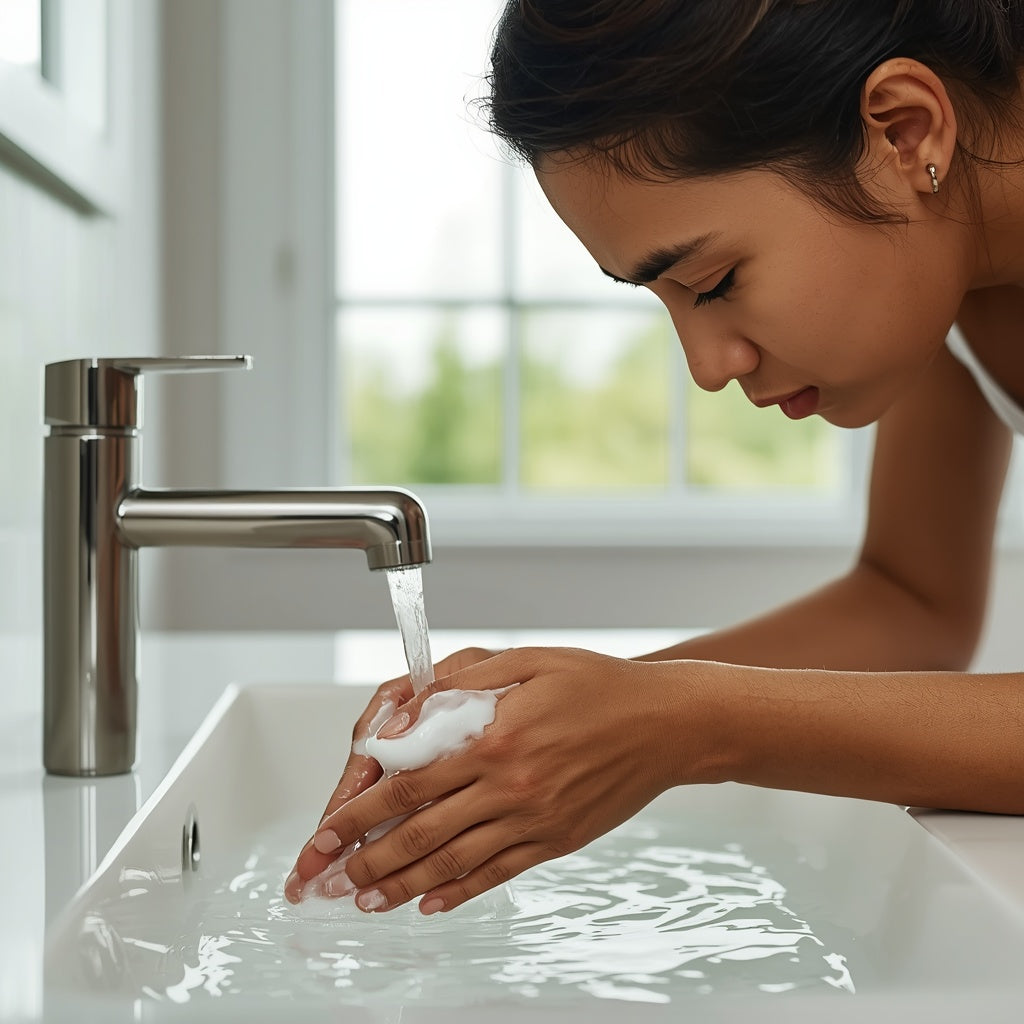
1) Wet your hands with clean, running water and apply soap.
Placing your hands in a puddle of standing water can cause contamination. Using soap is more effective than water alone, because surfactants in the soap remove dirt and microbes from the skin. Studies have not confirmed that antibacterial soaps are better than regular soaps; on the contrary, they can cause bacterial resistance and hormonal effects. So don't use antibacterial soap!
2) Lather your hands by rubbing them with the soap.
Thoroughly soap the back of your hand, between your fingers, your thumb, your palms, your fingertips, and under your nails. By soaping and scrubbing the hands, friction is created, which removes dirt, grease, and microbes from the skin.
3) Scrub your hands for at least 20 seconds.
A simple trick: hum the song "Happy Birthday" twice.
4) Rinse your hands thoroughly under clear, running water.
The soap contains the microbes and dirt from your hands so they can be rinsed off. Rinsing also reduces skin irritation.
5) Dry your hands with paper towels.
In public places, it is convenient to open doors with a paper towel after washing hands. This protects you from germs.
Conclusion
Although hand washing is the first line of defense against bacteria and viruses, too much hand washing can do the opposite! Firstly, not all bacteria are harmful, but many bacteria on your skin are responsible for your health. Secondly, excessive hand washing can remove protective oils that increase the risk of skin cracks. This allows bacteria to get under your skin and into your body. Removing these protective oils can become a challenge for healing, especially in dry and winter climates!
So if you wash your hands properly, you can not only reduce the risk of foodborne diseases, respiratory diseases, and intestinal diseases, but also combat antibiotic resistance. So make sure your hands are clean and you can reduce the risk of illness!