
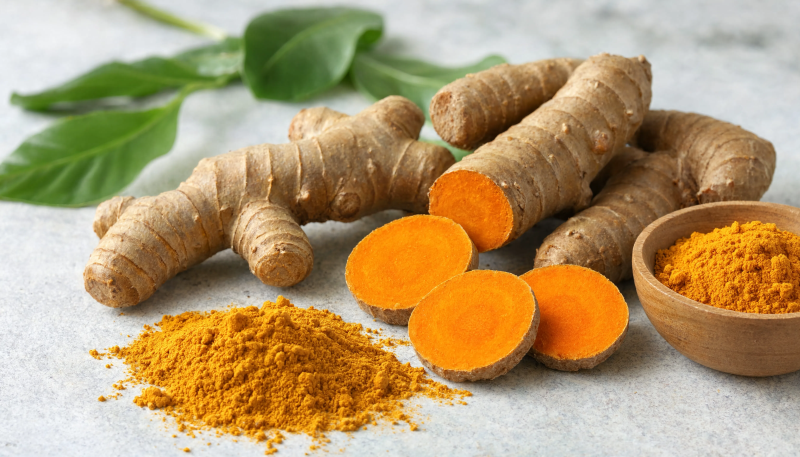
Not all curcumin is the same
For several years, researchers have been deeply engrossed in the turmeric root, driven to discover new properties of this herb. The available data is so intriguing that it entices even the biggest supplement skeptics to purchase a curcumin supplement, or at least encourages the generous use of turmeric in dishes.
Even if only half of all claims were true, it would still be nothing short of impressive. India, the main producer of the turmeric root, certainly benefits from this unstoppable interest.
At Ergomax, we receive daily questions about curcumin, especially about the different types available and the differences between them. Prices vary widely, and every brand seems to claim the best product. In this article, we explain the differences between the most interesting forms of curcumin to make it easier to choose the product that best suits you.
To do this in a clear manner, we will not look at individual products or prices but at the raw materials. Before we go into this further, let's first review what curcumin is, why absorption is an important point, and why its use is so popular.
What is Curcumin?
Curcumin is the yellow pigment from the turmeric root and is also known as "curcuma longa" or in Dutch "kurkuma longa". These terms are often used interchangeably in supplements, but technically, turmeric is the yellow powder used in cooking to flavor dishes, while curcumin is a natural chemical compound found in turmeric.
Curcumin belongs to the group of molecules known as "polyphenols." These bioactive plant compounds affect the human body in many different ways. In the case of curcumin, the effects are so interesting and widespread that they can no longer be ignored today.
Not just one form of curcumin is found in the turmeric root, but a variety of different forms. This group of curcumin molecules is called curcuminoids. In nutritional supplements, three main forms of curcumin are mainly found: curcumin, demethoxycurcumin, and bisdemethoxycurcumin.
Not all constituents of the turmeric root are yet known, but there are an estimated more than 100 different substances. In addition to the three main forms, the following curcumin analogs are also present: Hydrazinocurcumin, hydra-zinodemethoxycurcumin, hydrazinobisdemethoxycurcumin, hydrazinobenzoyl-demethoxycurcumin, dihydrocurcumin, hexahydrocurcumin, octahydrocurcumin, diacetylcurcumin, salicylcurcuminoid, monomethyl-curcumin, trimethylcurcumin, and 7–bis(3-4-dihydroxyphenyl)11,6-heptadiene-3,5-dione.
Approximately 2-6% of the turmeric root consists of curcuminoids, and it appears that the synergism between all these different curcumin molecules leads to a better biological effect than the intake of isolated curcumin forms. Therefore, always use a 100% natural curcumin product with a wide range of curcuminoids. Unfortunately, this is not always the case, as there are also artificial petroleum-based curcumin products on the market. These are naturally cheaper but not as effective and possibly not even safe.
Poor absorption of curcuminoids
The struggle in the world of curcumin no longer really revolves around the quality or origin of the natural material but mainly around absorption. It can actually be assumed that all standard curcumin supplements, the 95% extracts, are absorbed so poorly that they barely reach the bloodstream and therefore do not bring about systemic effects in the body.
The reason for the poor absorption has to do with the structure of the curcumin molecules; they cannot pass through the intestinal wall intact and are quickly converted by the liver into metabolites, after which they are excreted. Achieving meaningful blood concentrations thus proves not to be so simple.
This, incidentally, seems to be at odds with the epidemiological health data from India and the daily curcumin consumption. If curcumin is absorbed so poorly, how can it be that people in India, where curcumin intake is the highest in the world, still seem to benefit from it?
A very plausible theory for this has to do with the way Indian people cook with turmeric or curcumin. Mixing curcuminoids with hot butter or oil creates liposomes - tiny curcumin capsules of fat that transport the curcuminoids through the intestinal wall.
Once in the bloodstream, curcumin is very stable and well absorbed by a large number of tissues, even the hard-to-reach brain. The problem with oral intake therefore lies only in the first part of the absorption process, reaching the bloodstream.
The world's most popular herb
Not only in India is turmeric the most popular herb, but in the Western world, too, people are fully benefiting from this yellow wonder powder. With thousands of studies, curcumin is one of the best-researched botanical substances in biomedical literature. Many traditional indications for its use have been validated with modern research methods, and curcumin truly seems to have something special.
As a modulator of a wide range of molecular targets and, on the other hand, as a key regulator in specific biochemical processes in the body, the acute and long-term impact of curcumin is significant - provided that meaningful blood levels are naturally achieved.
More than 600 possible indications for use and over 175 known physiological effects exist. The ability to influence various systems simultaneously, its natural origin, and low oral toxicity make this a valuable substance in today's world. Many people seem to realize this!
Special: curcumin as a DHA booster
The general action of curcumin in keeping cells and tissues healthy, or more generally, in reducing cellular chaos, has been known for years and may no longer be as unique a fact as it once was.
A good example of an extraordinarily interesting effect recently discovered relates to a mechanism by which curcumin also appears to affect docosahexaenoic acid (DHA) concentrations of the omega-3 fatty acid in the brain when taken with alpha-linolenic acid (ALA).
This is particularly practical for vegetarians and vegans. Normally, animal products are the main source of DHA in the diet, and compared to omnivores, vegetarians and vegans therefore have lower DHA blood levels. However, in many population groups that consume only a plant-based diet, people are able to obtain adequate amounts of DHA.
Because the conversion of DHA from plant-based precursors is very low, this raises the question of whether other substances in food might contribute to the production of DHA. This seems to be the case with curcumin. Curcumin increases the pool of enzymes needed to convert plant-based fatty acids to DHA, and its role as an antioxidant and reduced oxidative stress also most likely has an effect on DHA concentrations.
For omnivores, there is also good news: DHA, for example from krill oil or Extra Virgin Cod Liver Oil with curcumin, also has a synergism in the nervous system.
Different types of curcumin
Suppliers use various techniques to increase curcumin absorption. The most interesting forms of scientifically validated curcumin are outlined below.
In recent years, the industry has made great strides forward; the somewhat older, but widely used combination of curcumin and piperine (black pepper) seems to be moving more into the background. One of the major disadvantages of standard curcumin 95% extracts in combination with piperine is that the raw materials are not always standardized for the number of curcuminoids; the composition and origin can vary per brand. Undesirable contaminations and low efficacy are not excluded here.
Moreover, curcumin and piperine combinations cannot be used by everyone. Especially when taking medication, a serious warning applies here. Piperine not only increases the absorbability of curcumin but also that of pharmaceutical substances.
If you have the choice, exclusively choose curcumin piperine combinations from reputable "organic" companies or opt instead for one of the patented forms below. Due to strict quality controls and consistent quality, you can probably avoid a bad purchase.
BCM-95® – DolCas Biotech
BCM-95® is a patented form of curcumin in which the curcuminoids are mixed with the essential oils of the turmeric root – Ar-turmerone. BCM-95® is 100% natural, and its absorption has been very well validated in multiple scientific studies.
[Unique] properties:
· Contains essential oils in combination with curcuminoids
· Scientifically validated absorption
Meriva® - Indena
Meriva® phytosome curcumin is a patented form in which the curcuminoids are coupled to form a complex with soy lecithin, a phospholipid, and microcrystalline cellulose.
[Unique] properties:
· Curcumin Phytosome
· Scientifically validated absorption
CurcuWin™ – OmniActives Health Technology
CurcuWIN™ uses patented UltraSOL™ technology to molecularly disperse the curcuminoids using a hydrophilic carrier, cellulose derivatives, and antioxidants.
[Unique] properties:
· UltraSOL™ Curcumin
· Scientifically validated absorption
Longvida® – Verdure Sciences
Longvida® is a patented form of curcumin that utilizes "Solid Lipid Curcumin Particle" technology. The exact details have not been released, but this technology uses a lipophilic matrix to encapsulate the curcuminoids.
[Unique] properties:
· SLCP™ technology
· Scientifically validated absorption
Curcumin C3 Complex® - Sabinsa Corporation
Curcumin C3 Complex® is a patented form of curcumin with specific ratios between the three main curcuminoids: curcumin, demethoxycurcumin, and bisdemethoxycurcumin.
[Unique] properties:
· Specific composition of curcuminoids
· Scientifically validated absorption
Theracumin® – Thera Innovations Inc.
Theracumin® is a patented form of curcumin in which curcumin is micronized into very small particles and then mixed with the plant gum "ghatti". This creates a colloidal curcumin suspension.
[Unique] properties:
· Colloidal curcumin suspension
· Scientifically validated absorption