
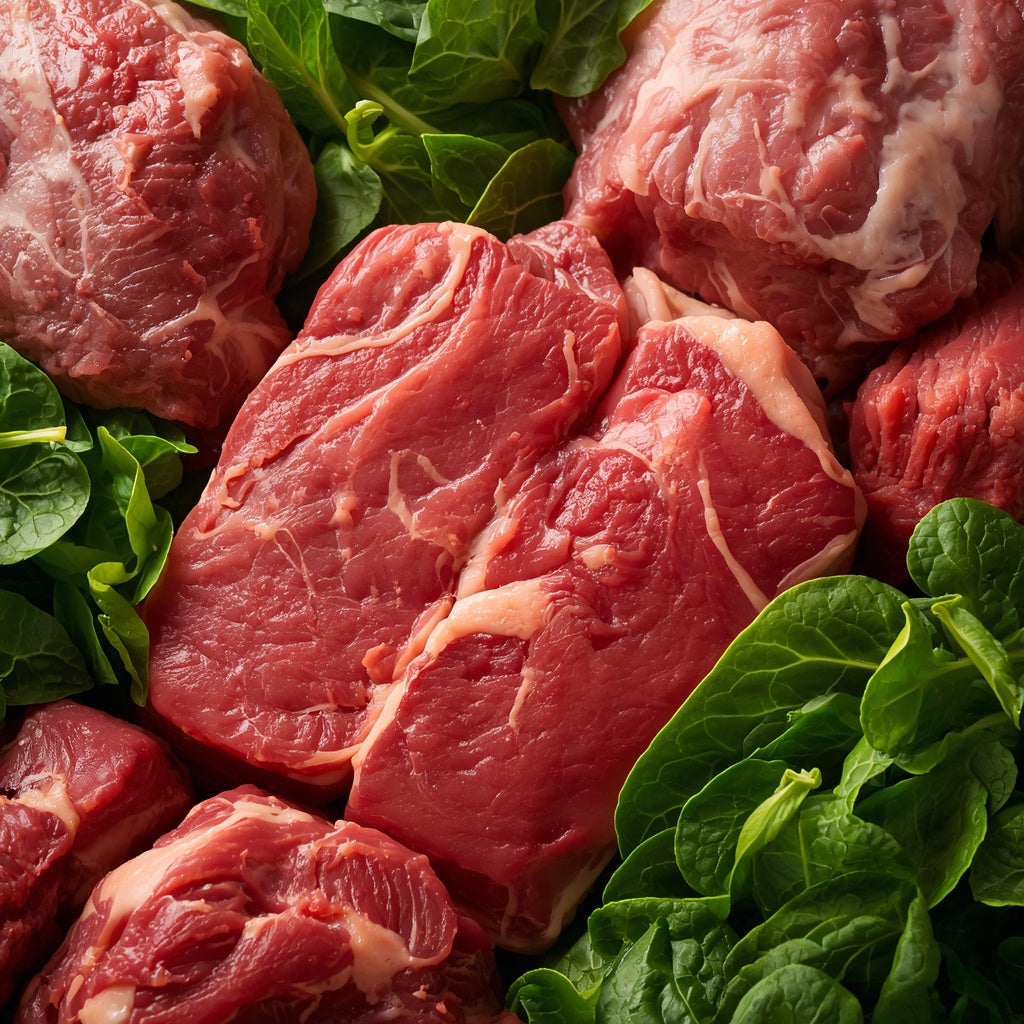
Please Sir can I have some more? A closer look at the carnivore diet
Worldwide, more and more people are following a vegetarian diet, and a growing number of people are even living according to the vegan philosophy, in which all animal products are excluded from their diet and lifestyle. For most plant-based advocates, the main reason to avoid meat is the climate impact of our food.
The conventional production of meat and dairy is often labeled inhumane, intensive and harmful to the environment. Aside from its impact on the climate, plant-based food is said to be much healthier, and eating too much meat is even said by scientific research and sources such as the Dutch Nutrition Centre to carry health risks. For example, a lot of red and processed meat is said to contribute to strokes, type 2 diabetes and cancer. But is glorifying plants really the right path toward good health and a sustainable world?
Meat is the new vegan
Followers of the recently hugely popular carnivore diet think otherwise. The “meat diet” stands almost in direct opposition to all of the above; in fact, it challenges everything conscious plant-based eaters have known and believed. In short, it is a ketogenic diet based mainly on high intakes of protein and fat from meat and dairy. Grains, vegetables and fruit hardly appear on the menu. American doctor Dr. Paul Saladino wrote a substantial book about it, titled The Carnivore Code, in which he draws on many different studies and experiences to counter “the fables and myths that are spread around the world” about how unhealthy it supposedly is to exclude plant foods from our diet.
The diet triggers aversion in many people, but also curiosity. It is so radically different and at the same time so grounded in a lot of knowledge that it is worth examining. After all, the truth about healthy eating changes as often as the wind, as the many nutritional guidelines, books, products, gurus and scientists of recent decades have shown. Being open to change and new insights is nowhere more important than in the world of nutrition. So let us give this diet our full attention as well and study it through the knowledge and experience of Dr. Paul Saladino.
Back in time
Dr. Saladino’s lifelong research centers on the question: “What should we eat in order to be as healthy and fit as possible?” He went looking for a diet that contains all the nutrients our bodies need to function, in the most optimal (bioavailable) form and with as few toxins as possible. But how can we determine which nutrients our body needs? According to Saladino, the answer lies in our “user manual,” except that we have lost that manual over the centuries. So he looks back through our history for the period in which, according to Saladino, we still had that manual. And according to him, that was the period in which we lived as hunters and gatherers; things went wrong from the moment agriculture arrived and we increasingly began to feed on plants and seeds.
Plants versus animals
The book goes into great detail about why eating plants is a bad idea for our bodies. According to Saladino, the complex chemical defense mechanisms that plants have developed over 450 million years can cause a great deal of harm in our bodies. Plants are difficult to digest, cause inflammation, contain harmful substances and contain a lower concentration of nutrients than animal food sources.
Saladino argues that meat has been wrongly labeled as the culprit and cause of ailments and diseases, and he carefully dismantles these “myths” about meat one by one. Our knowledge of the value of plant-based fiber, vitamins, minerals and other compounds is also thoroughly challenged. Saladino cites many scientific studies and compares data in tables and graphs. In the end, animal foods come out as the “true superfoods,” while plants are exposed as toxic, hard to digest and less nutrient-dense sources of food.
From nose to tail
Saladino’s ideas about nutrition partly align with the broader concept of ancestral eating—also known as ancestral eating, the concept on which the Paleo diet, organ therapy and nose-to-tail eating are also based. In short, ancestral eating means that to achieve optimal health, we should return to eating real, whole, unprocessed foods. Food the way cavemen ate it. The diet consists mainly of meat, fish and eggs, and in moderation of nuts, seeds, fruit and vegetables. It also specifically includes the organs of animals, because organ meat is rich in nutrients. It is the diet we ate for more than 200,000 years and on which we evolved, before agriculture appeared around 10,000 years ago and our brains supposedly began to shrink again instead of continue growing.
The carnivore diet, however, goes even further than the Paleo diet or ancestral eating. It largely excludes nuts, seeds, vegetables and fruit as well, although there are five versions of the diet, with the most accessible version still containing a reasonable amount of plant foods (about 15% of total intake). Saladino jokingly calls this version the “Carnivore-ish Diet.” He is therefore not much of a fan of plants and claims that our ancestors did eat them, but only when food was scarce; plants mainly served as “survival food,” and he argues that our whole body is designed to consume primarily animal food sources.
Miracle diet?
The diet is quite radical and extreme compared with what most people are used to, and it therefore provokes very mixed reactions. In any case, the internet is full of personal stories from people who claim to have experienced miracles since following this diet. People report weight loss, mental clarity, improved sex drive, and the disappearance of joint pain, stomach and intestinal problems, and allergies. Although there is still little strong scientific evidence for the diet, many studies have been carried out—some of which are cited in Saladino’s book—that at least make you think twice about the whole issue. Could it really be that we have been wrong all these years and would do much better on meat than on plant-based food? It could very well be that we have overestimated plants and unfairly “blackened” meat.
Granted, the book contains a great many interesting studies and facts that may even make the most committed vegan question their beliefs. After reading it, many people will certainly look at the nutritional value of meat and plants very differently and will be much more critical of the information they consume about their diet. Based on the claims in the book and the many positive experiences people have had with the diet, it does seem that we have unjustly banned meat from our diet for the most part and overlooked what an important food source it has been for thousands of years.
Extremely one-sided diet?
However, going fully carnivore is probably too extreme for many people. Aside from the health benefits this diet appears to have, it is also a very one-sided diet that includes unusual food sources with rather strong flavors. The original carnivore diet consists solely of animal foods. That means that everything that ever walked, crawled, flew, swam or at least had parents could potentially be on your menu.
There are no restrictions when it comes to quantities or meal times: you eat when you are hungry and stop when you are full. So you eat a lot of fatty meat, such as burgers, steak and red meat, to keep your calories and energy levels up. You do not only eat processed meat and poultry, but also a lot of organ meat, which is important for getting enough nutrients. You also eat a lot of fish (the fattier, the better), eggs, bone marrow (for collagen), and fatty animal fats such as tallow and lard. However, you only consume dairy products such as milk and yogurt in limited amounts, because the carnivore diet is partly about avoiding nutrients that your body cannot digest optimally, and dairy is one example. Spices may be used in limited amounts, but salt and pepper are especially common in this diet for seasoning meat. Supplements are not necessary on this diet.
Saladino gives an example of an average day in the life of someone following the Tier 5 Carnivore Diet (the version Saladino himself eats daily and the one most focused on animal meat and organs). A typical breakfast consists of 3 eggs fried in lard, 2 ounce (1 ounce = 1,417.50 grams) of beef liver, 1 ounce of beef kidney, 10 ounce of New York steak with salt, and 14 ounce of raw goat milk. Lunch consists of 60 grams of beef kidney fat, 4 ounces of shellfish cooked in tallow, 2 ounce of bone marrow and half a teaspoon of bone meal. Let us skip dinner; I think the point is clear. This is a common criticism of the diet. Many people quickly get tired of eating so much meat and organs and, after a few weeks or even days, start craving something as simple as a plain boiled bowl of rice.
The social and cultural importance of food
Alan Levinovitz, associate professor of religion at James Madison University and author of The Gluten Lie, also described the carnivore diet in his article The carnivore diet forgets that food does more than feed us as “an extremely restrictive eating pattern that seems to see food only as a means of keeping your body alive and ignores the social and cultural importance of culinary traditions.” He also admits, however, that the diet gave him interesting insights: after eating only meat for two weeks, his bowel movements were just as good or even better than before; apparently you can poop perfectly well without getting any fiber. And even though he had not eaten vegetables for two weeks, he had no scurvy and felt physically fine.
Psychologically, Levinovitz says, it is therefore a difficult diet. No cuisine is designed for people who eat only meat, which makes it hard to find good recipes, avoid monotony and take part in social meals. Christmas dinner, birthday cake, the wedding toast, grandmother’s recipe… all of that becomes off-limits. According to Levinovitz, the meat diet therefore isolates you quite a bit from the sociocultural meaning of food, and of course the question is whether that is really worth giving up. Here too, carnivore is the new vegetarian. Vegetarians will recognize the above social situations—and the discomfort that comes with them—all too well.
Does the carnivore diet create nutrient deficiencies?
Many people will wonder whether the diet can lead to nutrient deficiencies, but the studies done so far do not seem to indicate that. Several studies describe normal bowel movements, and no vitamin or mineral deficiencies are found. Not surprising, because red meat alone contains rich amounts of iron and zinc, while fish and seafood provide plenty of vitamin D. But bones and organ meat in particular are packed with essential micronutrients and contain them at higher concentrations than plants. Whether or not you follow the carnivore diet, organ meat is therefore a good addition to your diet because of its high nutritional value. With the high-quality supplements from Ancestral Supplements, it is very easy to take a serving of organ meat every day.
What remains uncertain is whether the diet provides enough vitamin C. However, you also seem to need less of this vitamin when following this low-carbohydrate carnivore diet. As discussed in the article The Carnivore Diet: Is Eating ONLY Meat Healthy, or Totally @#$ing Crazy?, the substance beta-hydroxybutyrate, which is produced by your liver when your body is in ketosis, at least partly replaces the body’s need for vitamin C. In addition, your body uses vitamin C, among other things, to make collagen, but the amino acids you get mainly from the bones and organs of animals already ensure that your body gets enough of this. Bone broth, such as that brewed by Broth of Life, is an ancient, simple and nutritious way to increase your collagen intake and provide your body with powerful nutrients.
The ethics of the meat diet
The main criticism of this diet is probably its ethical and sustainable aspect. Precisely in a time when we are undergoing a global transition toward sustainability, this diet is hard for many people to accept. Eating so much meat per person is not realistic on a global scale, and of course many animals will suffer and die in order to provide enough meat for humans.
Saladino addresses the ethical aspect of eating animals only in one short paragraph near the end of the book. Where he spends 43 pages explaining why fiber is not so good for your body, and 61 pages explaining why red meat does not shorten your life, he devotes only two (!) pages to the ethical aspect of eating animals.
Hunting, honoring and disrupted ecosystems
According to him, it is not cruel to eat animals when they have been killed through respectful hunting, and as humans we should feel and bear responsibility through this hunting experience to honor the life of the animal we have just shot by being the best person possible.
Many will agree with him that killing wild animals through hunting is more humane and respectful to animals than the way many animals live and are killed in industrial livestock farming. The question, however, is how realistic it is to obtain all the meat we consume through hunting wild animals. And ethically speaking, is it really enough to “be the best person possible” in honor of the animal that has just been killed? Is that really the end of the ethical discussion?
He also argues that the number of animal lives lost through harvesting plants—for example, by large harvest machines that kill insects, rabbits and mice—is much greater than the number of animal lives lost when we eat animals directly. In addition, whole ecosystems are disrupted by the creation and harvesting of vast monocultures. So, in a very rough sense, Saladino concludes that the carnivore diet is not ethically worse than, or even less bad than, a vegetarian diet.
But can we, from an ethical perspective, speak of differences in the “value” of animals, and are humans in a position to make a moral ranking about this? If it is purely about numbers, then more mice die worldwide for our daily bread than cows for the meat industry. Regardless of whether we are in a position to make such an ethical judgment, it seems far too simplistic to base it only on numbers and ignore the quality of an animal’s life, the way animals are treated, the amount of nutrients an animal body provides, how necessary it is to kill the animal in question, and how sparingly the animal source is used.
Revaluation of meat
His brief ethical explanation will not please everyone. Still, it remains a difficult puzzle to determine which way of life ultimately causes the least CO2 emissions, since you would have to trace and measure the emissions of all the factories, farmers, animals, trucks and people involved. It is also impossible to see what both lifestyles ultimately cost in animal lives and how they compare with each other (is killing one mouse as bad as killing a deer?). Despite the ethical and sociocultural objections, the diet has certainly caused quite a stir in the nutrition world.
After reading The Carnivore Code, we can cautiously conclude that it does seem that meat deserves a revaluation, although the question remains in what ways eating meat can contribute to a more sustainable world. Of course, for various reasons it is better to choose local, organic, grass-fed and certified foods that have not involved pesticides, herbicides or GMOs. On that point, most people who want to improve the world now more or less agree. It is also important to realize that nature is cyclical and that there are benefits for both your health and the world in aligning your diet with that rhythm. Whether you have come to love the carnivore diet or still choose a different way of eating, a better world and better health always begin with choosing quality when it comes to food.